

A commercial lasts 15, maybe 30 seconds.
But the images can stick for years.
A father helping with homework. A teenager buying their first car. A grandmother laughing at the dinner table. These moments may feel ordinary, but advertising helps define what “ordinary” looks like — and who gets included in that picture.
That’s why representation in advertising matters.
New research from the Geena Davis Institute examines 20 years of Cannes Lions Film and Film Craft shortlisted and winning work, offering a long-view look at how diversity in advertising has evolved from 2006 to 2023. The findings show meaningful progress in some areas, alongside persistent gaps in visibility and portrayal.
The central question is simple: Who gets seen? And just as importantly: Who gets to speak?
Advertising reaches billions of people every day across screens large and small. Unlike long-form entertainment, ads work fast. In seconds, they communicate who belongs, who leads, who nurtures, who buys, and who matters.
Those signals add up.
REPRESENTATION IS RARELY NEUTRAL
For years, Geena Davis Institute research has shown that representation in media is rarely neutral. Repeated patterns — whether about gender, race, age, disability, body type, or LGBTQIA+ identity — shape expectations in ways audiences often absorb without noticing.
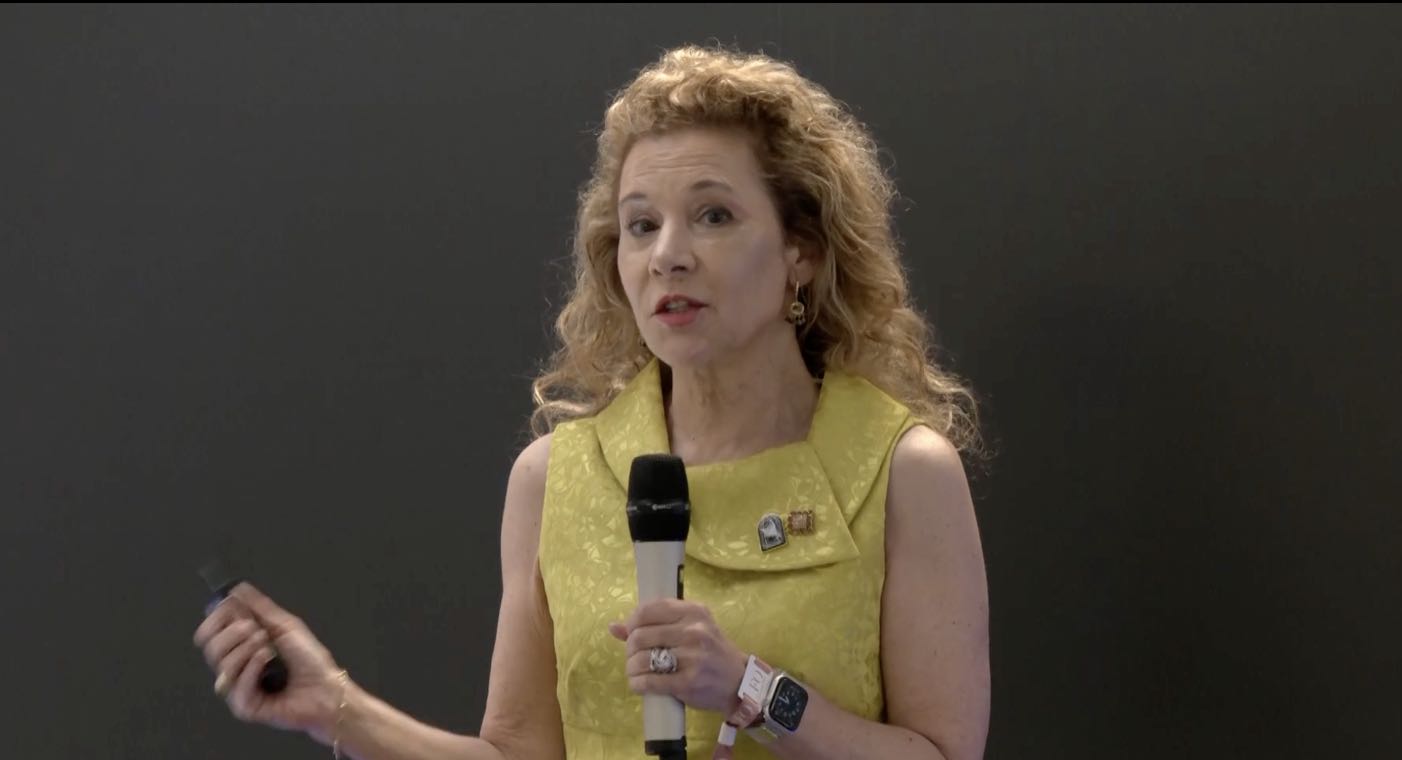
According to institute President and CEO Madeline Di Nonno, who unveiled the organization’s latest study at the 2026 Cannes Lions International Festival of Creativity, traditionally, the U.S., the U.K. and France have dominated the submissions to the Cannes Lions awards. Since 2020, though, that has begun to change, she says: More submissions from China, Korea, Chile, Saudi Arabia, Egypt and Ecuador.
“I think it’s really important that not only do we see diversity in terms of who’s showing up, but diversity in terms of who’s submitting,” Di Nonno says. “So, I think that’s a positive.”
This latest study tracks how award-winning advertising reflects those patterns over time.
There is progress worth acknowledging. More advertisers are clearly thinking beyond narrow defaults. Campaigns increasingly feature broader identities and more expansive portrayals of modern life. That matters because audiences today are diverse, and they recognize when media reflects — or erases — their lived experience.
But visibility alone is not the full story.
Being on screen is not the same as being centered.
Representation is also about agency: who drives the narrative, who has speaking roles, who is shown with complexity, and who is reduced to stereotype.
I think it’s really important that not only do we see diversity in terms of who’s showing up, but diversity in terms of who’s submitting.
That distinction matters because inclusion can be superficial. A campaign may appear diverse at first glance while still relying on familiar hierarchies underneath.
“It’s one thing to say who is showing up, but then do they have presence?” Di Nonno says. “Do they have agency in the spot? And we’re really not seeing that.”
This is where the research remains especially relevant for advertisers, agencies and creative leaders.
Di Nonno tells the Cannes Lions audience that her research team “calculated that if we continue at the rate that we are, we will not hit parity until 2033. So I’m hoping all of you will make a pledge: Let’s cut that in half. Do we think we could finally hit parity by 2028?”

REPRESENTATION AS STORYTELLING CRAFT
The most effective advertising doesn’t treat inclusion as decoration. It treats representation as storytelling craft.
That means showing disabled people as fully present in everyday life — not only in issue-based campaigns. It means portraying older adults with dimensionality, not as punchlines or background figures. It means expanding who gets to be funny, powerful, aspirational, vulnerable, or ordinary.
In other words: better representation creates better stories.
And better stories create stronger connections with audiences.
For the advertising industry, this is both a creative challenge and an opportunity. The brands that resonate most deeply are often the ones that understand something fundamental: people notice when they are authentically seen.
It’s one thing to say who is showing up, but then do they have presence? Do they have agency in the spot? And we’re really not seeing that.
After two decades of research, one truth remains consistent: Media doesn’t just reflect culture — it helps build it.
Every casting choice, camera angle, voiceover and storyline contributes to a larger picture of whose lives are considered visible and valuable.
That’s why this work continues.
The Geena Davis Institute uses data to help move conversations beyond assumptions and toward measurable change. Research gives the industry something concrete: evidence of where progress is happening and where blind spots remain.
Twenty years of advertising show that change is possible.
They also show there is still work to do. Check out the Geena Davis Institute’s full report.