The FIFA World Cup — men’s and women’s — joins the Olympic Games as arguably the best examples of the positive sides of nationalism and patriotism. Yes, those terms have largely been hijacked as negative descriptors, often wrapped in racism and anti-immigrant sentiment, but at the World Cup, everyone is “allowed” to be unashamedly patriotic, and it is mostly a wonderful celebration of that fact.
Yet, the representation of each national team is not always as clear-cut as saying, “here is a squad of 26 players born and bred in this specific country.” Indeed, there are so many examples of players “choosing” this country or that, sometimes opting to play for the countries of their parents, or even grandparents.
An example? Consider Michael Olise, born and raised in London. He finished the Men’s 2026 World Cup by breaking the all-time assists record. He is considered one of the best players in the world. But he plays for France, not England.
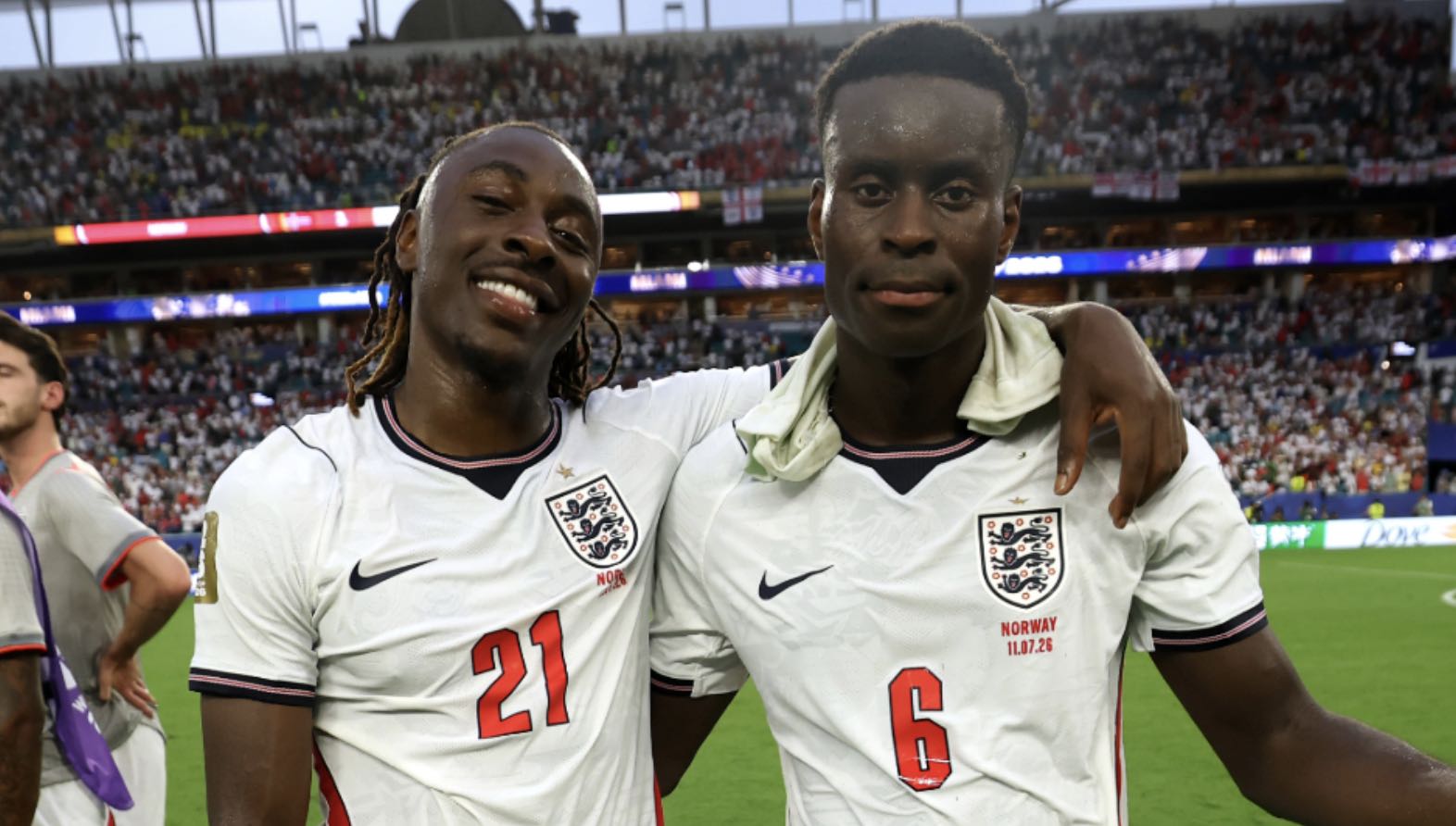
ENGLAND FINISHED 3RD AT THE TOURNAMENT
England’s squad, however, can demonstrate so much about immigration patterns, both modern and historic. England, who were considered among the favorites with sportsbooks and prediction markets, ended up finishing third. It was the team’s best finish since winning the tournament in 1966, but the ethnic make-up of the team is so different compared to 60 years ago.
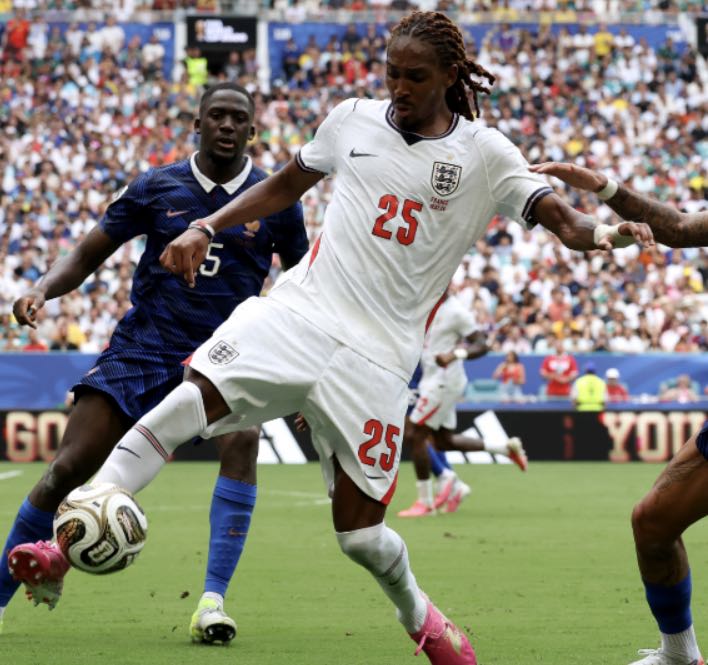
For a start, two players from the team — Marc Guehi (Ivory Coast) and Trevor Chalobah (Sierra Leone) — were born outside of England but brought to the country as the children of immigrants. That’s not completely unusual for a World Cup squad, but the list of first- and second-generation immigrants on England’s team is.
Djed Spence was born to a Jamaican father and a Kenyan mother; Eberechi Eze has Nigerian parents, as do Bukayo Saka and Noni Madueke; Kobie Mainoo has Ghanaian parents; Marcus Rashford has a mixed heritage from Jamaica and St Kitts; Ivan Toney’s family came from St Vincent and the Grenadines.
IRISH IMMIGRATION PATTERNS INFLUENCED SQUAD
Now, while the first reaction might be that England may have benefited from some great players through African and Caribbean expats settling in the country, the picture is much more complicated than that. Jude Bellingham, who was arguably England’s best player at the tournament, has an Irish and Afro-Jamaican background.
The father of Harry Kane, who is England’s captain and record goalscorer, was born in County Galway, Ireland. Declan Rice, England’s midfield general, represented the Republic of Ireland at various levels until switching allegiances in 2019. He had qualified to represent Ireland through his grandparents. Anthony Gordon and Elliott Anderson are both eligible to play for Scotland.
It’s an incredible picture of families crisscrossing the globe, with their children ending up playing at the highest level on the grandest stage for England. As mentioned, many English-born players went the other way. Erling Haaland — Norway’s irrepressible giant striker — was born in Leeds. Jamal Musiala moved to England as a child from Germany, played for both English and German youth international teams, but chose the latter to represent as a “full” international. Aaron Wan-Bissaka was born in London, stayed in England all his life and career, but ended up representing the Democratic Republic of Congo at the World Cup. He played proudly and passionately for DRC when facing the country of his birth in the knockout stage.
Arguably, this tells us the World Cup can celebrate national pride without needing to emphasize ethnic purity and nativism, if such concepts even have meaning in the modern world. Those England players are proud of their heritages, often expressing fondness for the countries of their parents and grandparents. But few doubted their pride and passion for England when pulling on the shirt.
In this era where immigration debate is fraught with toxicity, it was a beautiful thing to witness.