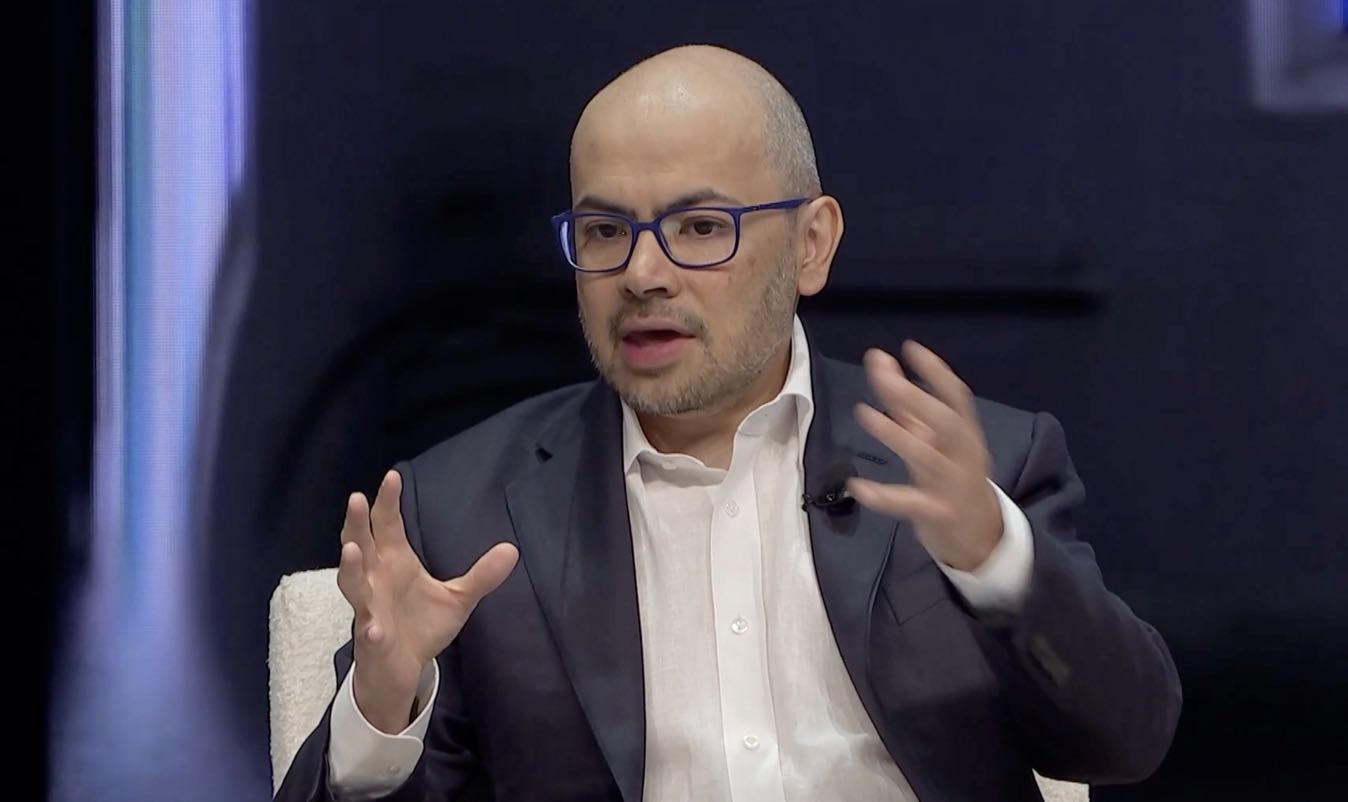

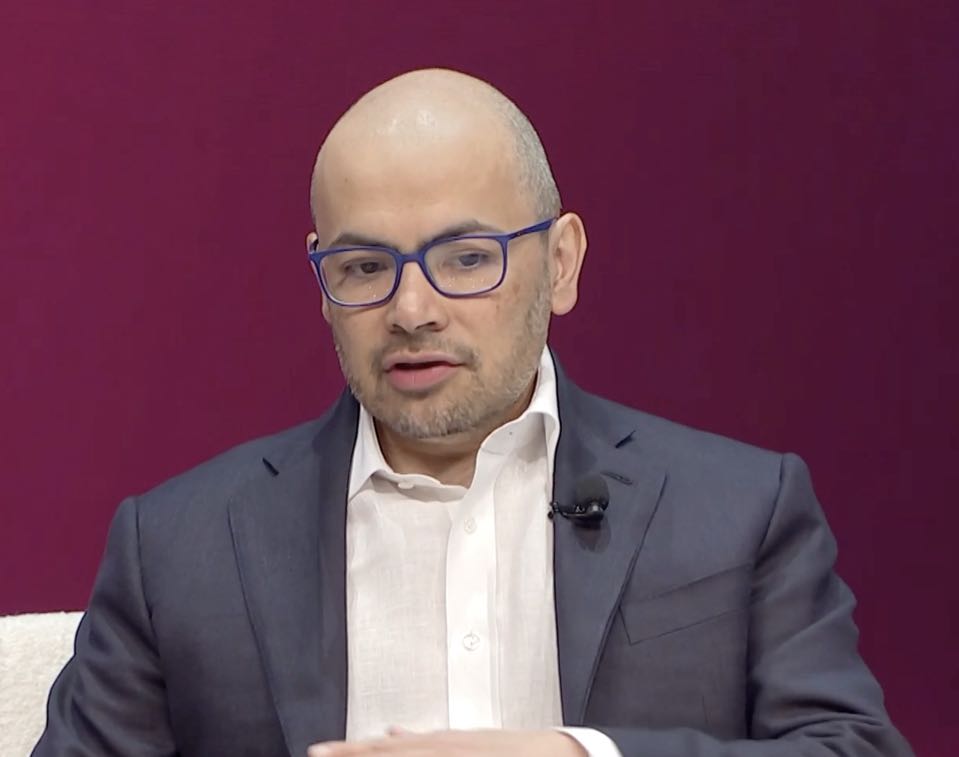
For Google DeepMind Co-Founder and CEO — and Adult Cross Cultural Kid — Demis Hassabis, the fusion of technology and art is a lifelong pursuit.
It began in the early 1990s while he was designing best-selling simulation games like “Theme Park” and continues today at Google DeepMind, where his team is building artificial intelligence tools to empower artistic expression — while pushing the boundaries of AI.
British-born Hassabis, whose father is Greek Cypriot and mother is Chinese Singaporean, spent his summers until the age of 10 in Singapore, a city-state he calls a “magical futuristic world.”
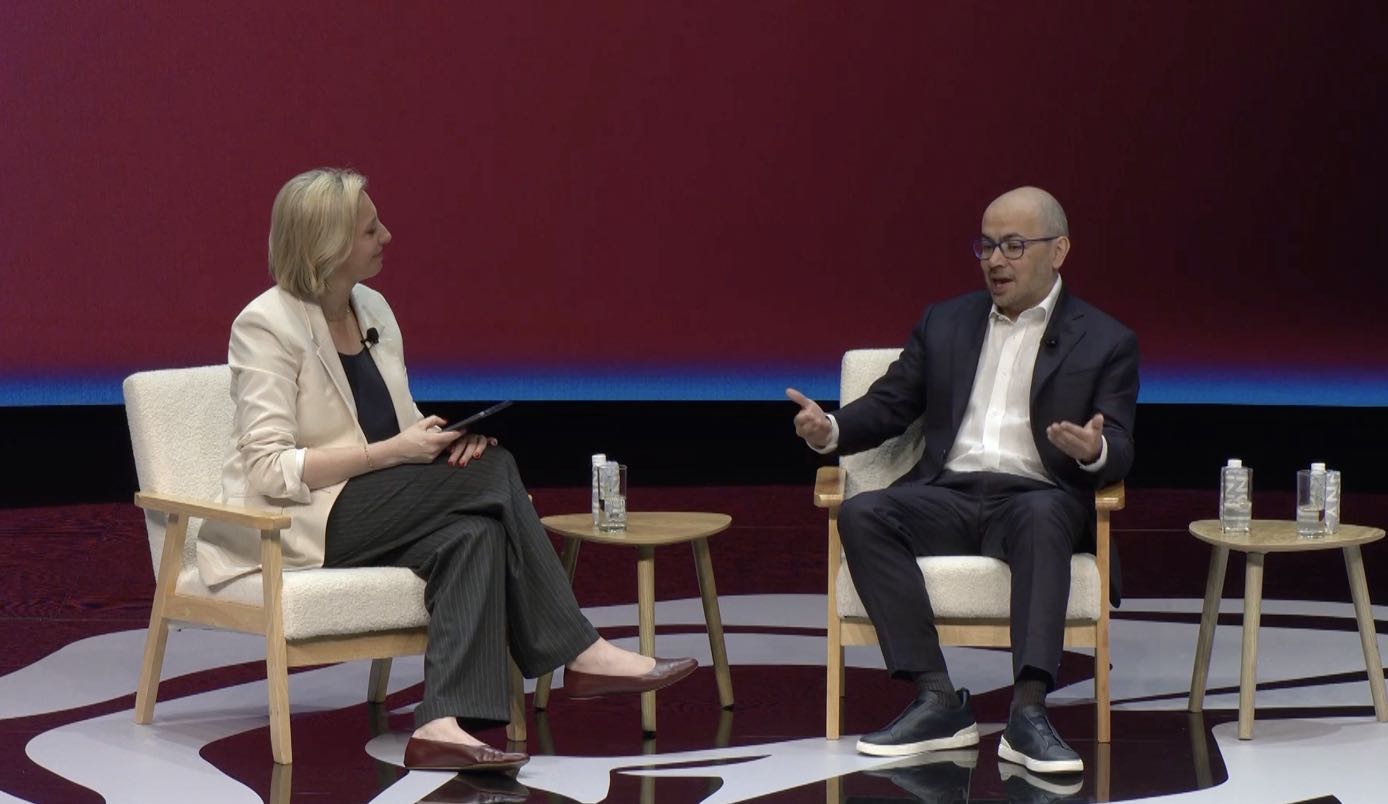
In a fireside chat at the 2026 Cannes Lions International Festival of Creativity, Hassabis — along with Scott Belsky, a partner at A24, an independent film, television, music and publishing studio based in New York City, U.S.A. and the founder of A24 Labs — discussed Google DeepMind’s collaborations with artists across film, games and music, and how these partnerships are steering AI toward supporting authentic storytelling.
IMPACT OF AI
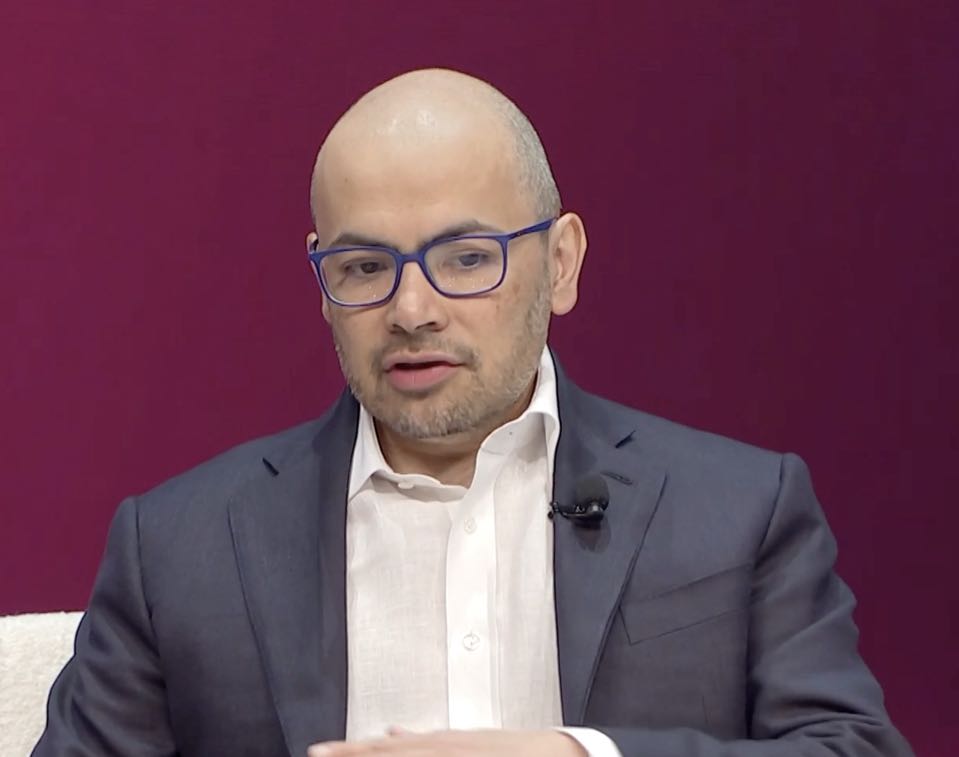
For AI in general, Hassabis says it’s “a bit overhyped in the very near term,” in terms of all the different industries and how much are they going to change. While there will be “a lot of change,” he adds, it may not be “as much as some people are saying.”
Over the medium to long term, i.e. over the next 10 or 15 years, though, he thinks it’s still underappreciated how much transformation AI is going to bring.
“I think it’s actually going to be a sort of almost a new human era,” according to Hassabis.
When looking for partners to work on AI projects — be it science or creative work — Hassabis says he likes to find people who are world-class in that domain and then go and partner with them to understand not only what do they need from AI tools, but also what kinds of problems are they trying to address?
Those problems tend to be “really deep” ones, according to Hassabis.
“Obviously, they’re dealing in their businesses or their products, but only some of them may be appropriate for where AI is today,” he says. “So maybe we’ll build that together and then brainstorm, ‘Well, what if AI could do these things, then it would be suitable to address this other problem.’ And we’ve done that many, many times, very successfully,” particularly in the life sciences.
I think it’s actually going to be a sort of almost a new human era.
That success has led Hassabis and his team to start working in the creative industries.
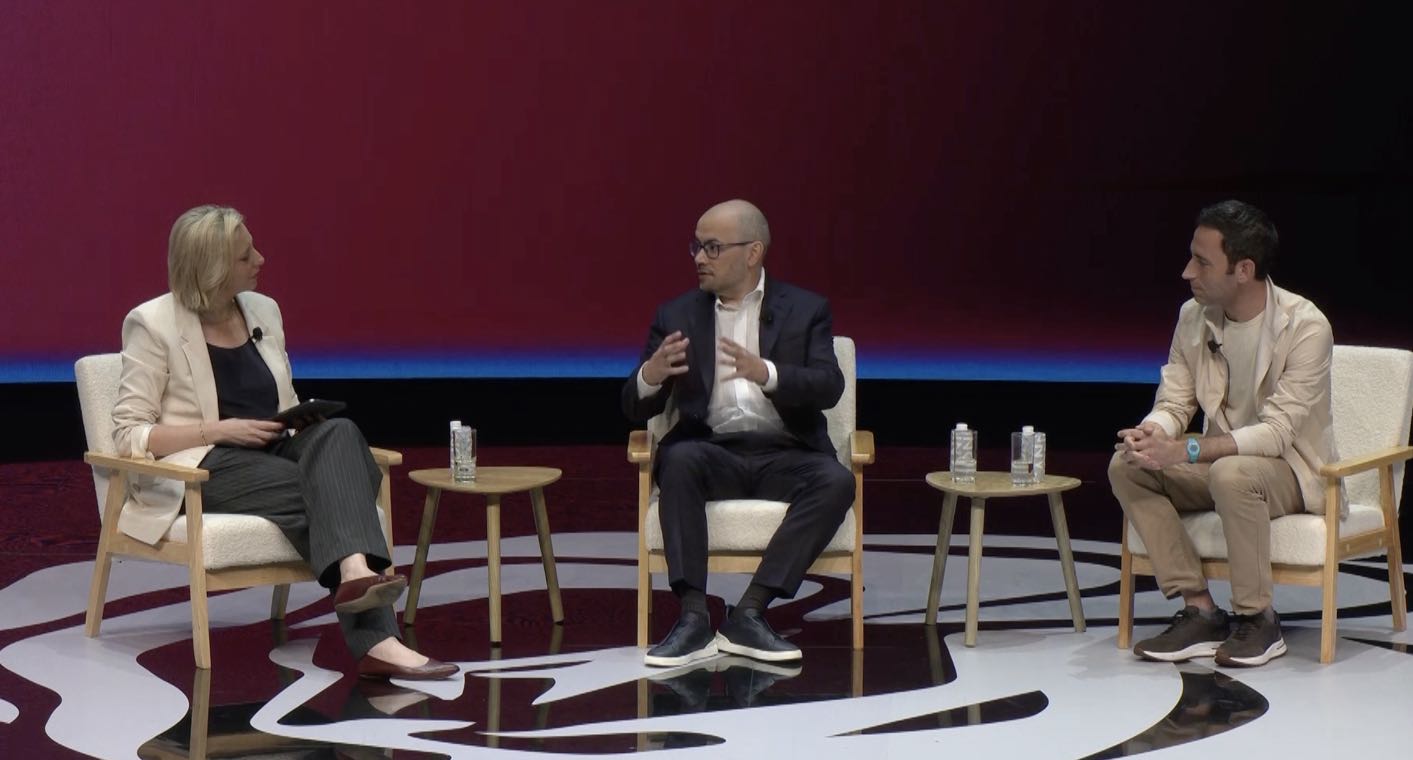
One of those partnerships is with global entertainment platform A24, which, according to Belsky, is looking at ways to merge AI with the creative process.
TALENT IS KING
A24 ultimately revolves around its talent, i.e. the filmmakers it works with, Belsky adds.
“Sometimes that means finding new resources for them, oftentimes it means following their curiosities,” he says.
Right now, Belsky says some filmmakers have “curiosities around telling stories in new ways and new mediums. I think folks are curious about new ways of using YouTube to reach their audiences and engage their audiences and build a following. I think that there are all sorts of curiosities.”
That said, “there’s also a substantial number of artists who are still like, ‘You know what? I don’t like this new technology stuff. I don’t think that it kind of gives me the control and precision and craft that I need and I’m not interested,'” according to Belsky.
“We always take their lead,” he says. “But I do think that the purpose of this research partnership was to pursue some of these curiosities that folks do have.”
Belsky references the onset and evolution of computer-generated imagery as an example.
There’s also a substantial number of artists who are still like, ‘You know what? I don’t like this new technology stuff. I don’t think that it kind of gives me the control and precision and craft that I need and I’m not interested.’
“If you look back to the age of CGI evolving, CGI was a new technology for storytelling, and it was pretty bad until it made dinosaurs come alive on screen and films like ‘Jurassic Park’ to kind of change the world of storytelling,” he says, adding: “But if you look at how technologies like that evolved, it was really in partnership between technologists and filmmakers that were curious.”
SOFTWARE AND CREATIVITY
Despite AI’s rapid progress, Hassabis doesn’t think the world is entering a phase where software comes up with ideas.
“I have the deepest respect for the creative process,” which he learned from the games industry, according to Hassabis.
To that end, the main thing Hassabis says he loves doing in his spare time is engaging with filmmakers and watching films.
“I love everything that A24 does. So this was a natural partnership for us to do,” he says, while at the same time admitting it is “still early, very early days. It’s very nascent, I think, how best to use this new technology like AI.”
Hassabis agrees with Belsky’s mentioning the early days of CGI or computer-generated animation like what Disney’s Pixar studio has done.
I love everything that A24 does. So this was a natural partnership for us to do.
“Initially, there’s a lot of resistance to that,” he says. “And then now it’s sort of part of the standard tool set. I think AI is … going to end up being like that. But there’s going to be a lot of iteration and exploration and research that needs to be done first and that’s very much what this partnership is about, is exploring that with creatives and technologists working hand in hand, world-class at what they both do, but then really passionate about the other side of it. And I think that’s what it’s going to take to actually produce the next tools that will then help the next set of creators.”
THE NEXT DECADE
Looking ahead the next 10 years, Belsky says the use of AI in filmmaking “will yield the unexpected.”
“I think what we’re seeing today are the early kind of playful or weird use cases of some other new tech, but in the future, imagine stories that merge in different mediums, imagine a new world of small productions that emerge from folks who never even had access [to this kind of technology] to be able to tell a story,” he says.
“Imagine storytellers able to quickly test their ideas and kind of follow their creative whims or mistakes of the eye and see where they lead,” Belsky adds. “I do think that will unleash a new era of creative risk taking, which ultimately yields great stories.”
Hassabis thinks AI will allow creators to more quickly iterate and brainstorm.
“That what we’ve seen so far,” he says. “And then to get to those ideas that end up wanting to connect to and then pushing forward. But at least for the foreseeable future, I think that the craft and the sort of soul of the creative piece comes from the human creator. I don’t think that’s gonna change any time soon, and I think that’s what audiences want too.”