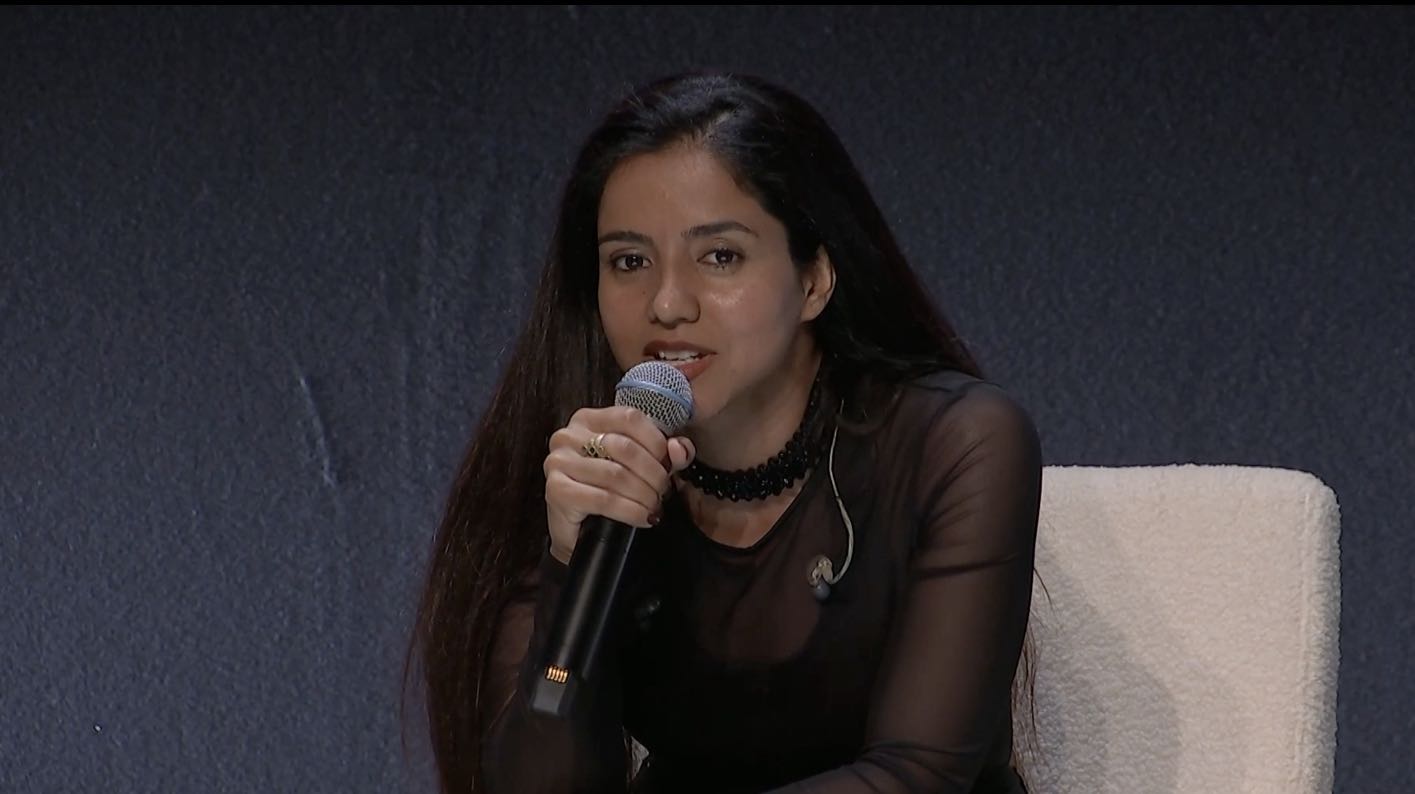

Author, rapper, Third Culture Kid and human rights activist Sonita Alizadeh was born in Afghanistan under Taliban rule and escaped being sold into marriage as a child — not once, but twice.
She found her voice, quite literally, through rap music. Her powerful, stark video, “Daughters for Sale,” sparked a global movement. Her story was further brought to life in the Sundance-winning documentary, “Sonita.”
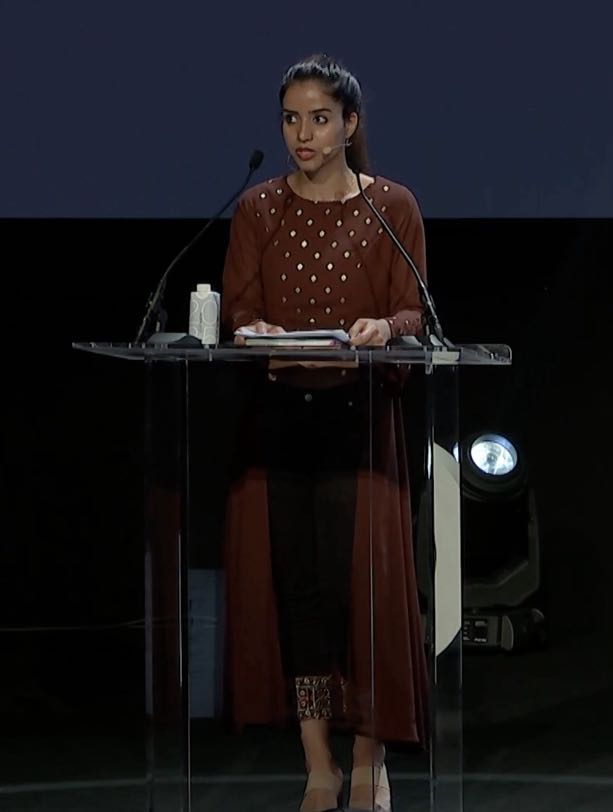
Alizadeh, who was awarded the Cannes Lionheart award in 2025, has been on many stages where in telling her story, she’s had to relive “the hardest moment of my life, when I was almost sold into marriage.”
Every time she shares her story, she hopes it might spark change for even just one of the 12 million girls sold into marriage every year. But instead, people would come up to her and say, “I’m sorry for what you went through.”
Alizadeh says she doesn’t want to know some else felt sorry for what she went through.
“If you really feel sorry, I want you to do something, she says. “Use that feeling to help the girls that didn’t have the angels I had. The girls that don’t get a second chance.”
‘SHATTERED’ DREAMS
Alizadeh was around 16 years old when she was nearly sold into marriage for the second time.
She remembers sitting in a classroom with her two best friends, brainstorming ways to escape child marriage forever. At one point, one of them told the other one, “When you meet a guy, your future husband, just put turmeric on your face, and act crazy, so the husband, the man, will overthink this, and stop thinking about having a bride who is sick.”
When Alizadeh’s mother told her there was a man in Afghanistan who wanted to marry her, all of her dreams “shattered,” and she says she felt like she was being “chucked.”
“I grew up in a family that we often went to bed [with] empty stomachs,” she says, “and the cold traveled into our bones, but we had one thing, always: love, so much love.
“But when my mother said those words, something broke within me,” Alizadeh continues. “I hated everyone right after hearing that. I hated everything, and especially myself, for being so powerless. How could I stand against a tradition that was living within everyone who I knew, who I loved, and killed dreams?”
Hope, it turns out, came in the form of a woman at a nongovernmental organization in Iran where Alizadeh was living who helped her and her friends, who just wanted to know how to read and write, how to write their names. That magic came in the form of a filmmaker called Rokhsareh Ghaem Maghami, who followed Alizadeh with her camera for three years.
All that filming recorded Alizadeh’s struggles as an undocumented migrant and an aspiring musician trapped in Iran.
“I will never forget the day when she was filming me, I looked at her, and I asked her, ‘Can you buy me? And I [will] pay you back once I’m a famous rapper.’ She didn’t expect anything. She basically helped,” Alizadeh says.
Maghami gave Alizadeh’s mother some money, and over the next six months, Alizadeh didn’t go to school because if she did, “the Iranian police would find me and shut down the school for everyone, I knew.”
She used those six months to write and produce the video for “Daughters for Sale,” which when released went viral.
“I wasn’t really expecting this, because I wrote it for myself, for my friends, my three fans at the NGO,” she says.
If you really feel sorry, I want you to do something. Use that feeling to help the girls that didn’t have the angels I had. The girls that don’t get a second chance.
Suddenly, the invisible girl was a face, was being seen and heard around the world. That led to Alizadeh receiving a full high school scholarship to go to the United States “to study and be in a real school for the first time.”
Alizadeh left for the United States without saying a “proper goodbye” to her family.
“I arrived in the U.S. with so much happiness and sadness, happy that I was finally going to live my dream life, and sad because I knew that the decision I made probably, it could separate me from my family forever,” she says.
When Alizadeh landed in Utah, U.S.A., she fell in love with the tall mountains that reminded her of her hometown, Herat. She started living two versions of herself: one, the “silly little girl” that she was never allowed to be, and the other one was a teenager who wanted to ride a bike, paint her nails, watch a scary movie with her friends.
But happiness didn’t erase the pain. She begins to weep while telling her story at the Cannes Lions Festival of Creativity in 2025.
“I couldn’t forget the friends,” she says. “And then I couldn’t forget that child marriage was happening even in the U.S.”
That was when she “made the biggest decision of my life: to relive my story. Over and over.”
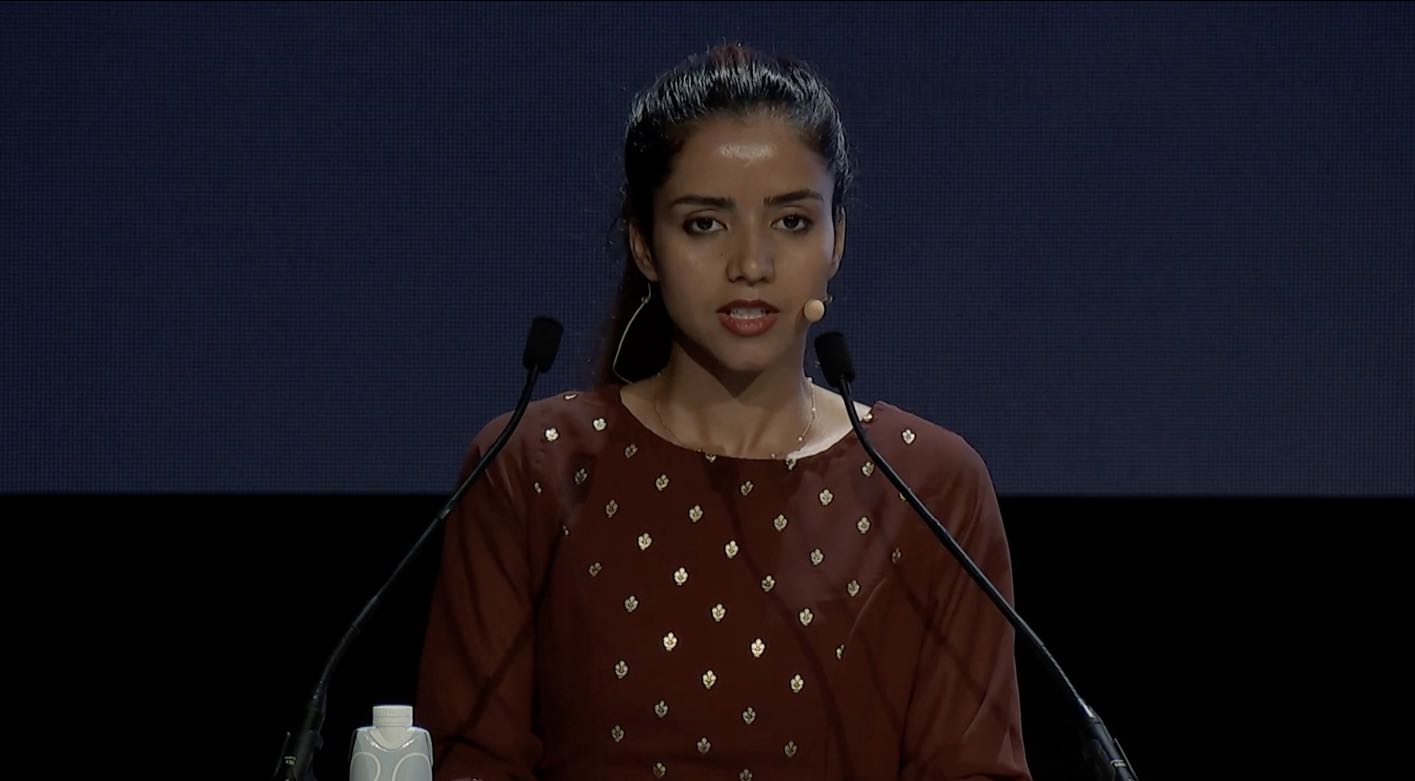
Alizadeh talks about an Afghan girl named Abedah who poured gasoline on herself to end her life.
“She couldn’t really bear the thought of marrying someone like a Taliban fighter,” Alizadeh says. “I would have done the same thing if I was in her situation. This is what really happens when the world abandons girls, when international NGOs, they forget about the promises they made. And today, I was going to show you a powerful PowerPoint and images, and my life story more. But now I just want us to focus more on Abedah standing in flames. And I believe that any of us can really make a change, big or small, only if we want to.”
SECRET SCHOOL
When Alizadeh started a secret school in Afghanistan, she was amazed at the number of people who reached out to her, asking how they could help, how they could offer their time, their skills, their energy.
“This is how we should be,” she says. “We need to care for one another. We need to be united, because this is how we really can bring peace, unity, and today, because of the support we received on social media from different people, our students in Afghanistan ages from 12 to 49 years old are living differently.”
When those students first came to class, some of them were thinking of ending their lives, “but now they have a different vision for themselves,” according to Alizadeh.
In a video Alizadeh shares with the Cannes Lions audience, the students say:
I’ve been attending this secret school for about a year or maybe a year and a half. Because of this opportunity, we feel more alive and more hopeful. My wish is for this course to continue. For as long as possible.
Before coming here, I felt broken. I truly hope this place can remain open to us. This school is a source of hope for all of us. Thank you for keeping its doors open.
If rap isn’t your tool, Alizadeh wants you to “pick whatever is accessible for you, speaks close to you. But I want you to act, please, and use the stories and the pain that we saw to encourage more people to think of others who don’t have a voice.”
Alizadeh’s mother, the same mother who tried to sell her into marriage, is “my biggest fan” nowadays.
Her mother “didn’t know better when she was in Afghanistan because she was married at age 12, and she thought this was the only solution for me to be protected. But now, because she has access to the internet and education, she thinks differently, she supports me a lot, and she goes to high school herself, and also does podcasts with me to talk about child marriage and encouraging other parents to tell them that girls can be more than the label put on them,” according to Alizadeh.
RAP AS A MEDIUM
For Alizadeh, rap is a way for her to channel her anger over child marriage.
Additionally, “rap is a tool that you can share longer stories, and you can deliver the message, the anger, whatever is true about the story,” she says.
Rap is also a way for Alizadeh to highlight her identity, given that in Iran and Afghanistan, girls are encouraged not to have one, especially now under the Taliban regime.
“In many rap songs that I wrote, I talk about identity, because identity is the main thing for anyone,” she says. “The war in Afghanistan right now is on identity. The Taliban ban women from going to school, workplaces, basically trying to tell them that you don’t exist, and you have no identity. And when you feel like you have no identity, it feels very hard for you to move forward.”
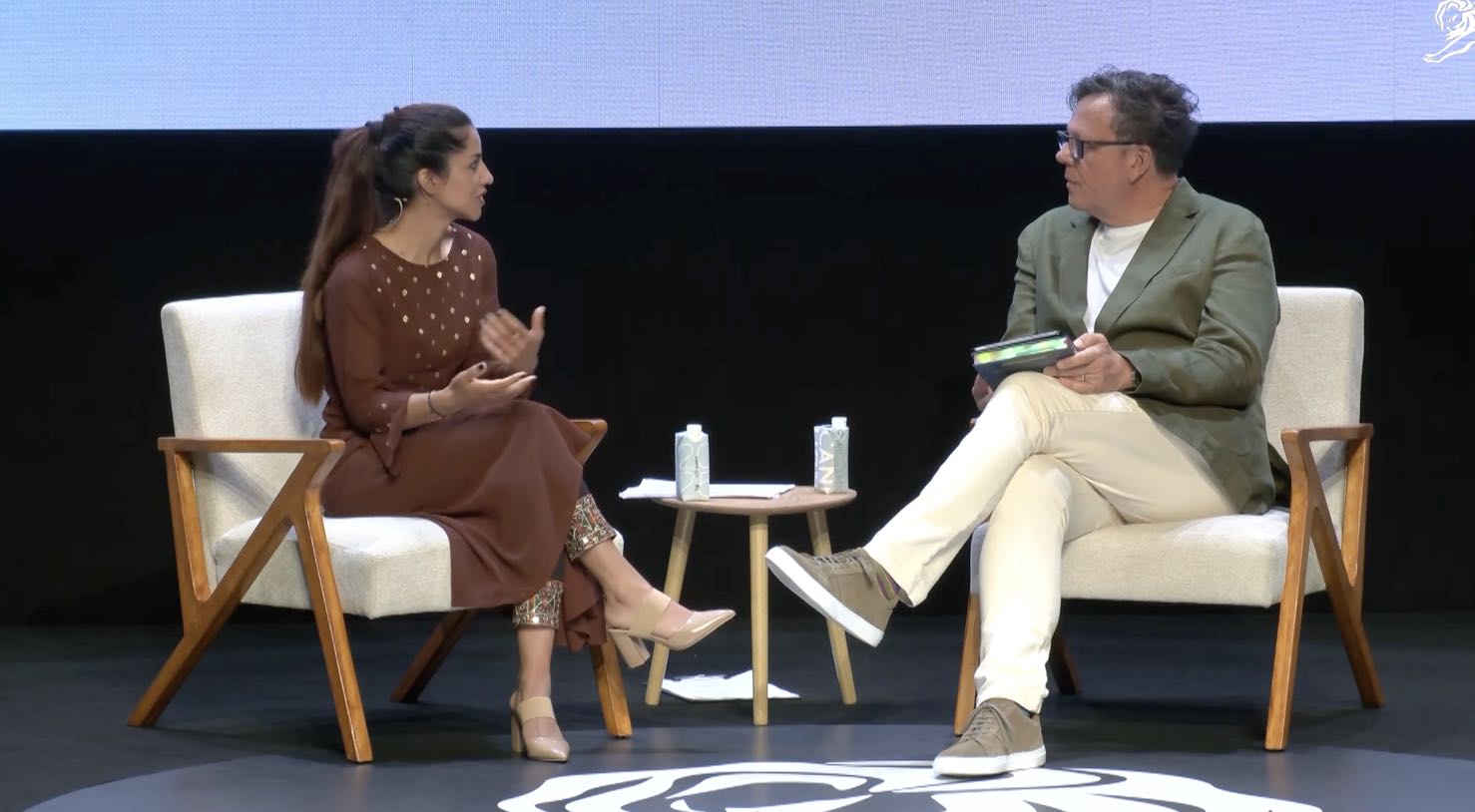
Through rap, Alizadeh is telling herself and others that they “exist, I am this, you are whatever you would like to be. So identity is something that really drives you forward towards the future you wish to have.”
When she thinks about what’s going on in Afghanistan, “it really pisses me off that people are using religion and other controversial topics as a way to control, especially women.”
Alizadeh was in particular “mad at men in Afghanistan that they allowed the Taliban to do the same thing that they did in 1996. I think for us to really make a positive change, we have to talk to men first, to support women, because in Afghanistan, women do not receive any support from men, and this allows the Taliban to continue oppressing women.”
CALL TO ACTION
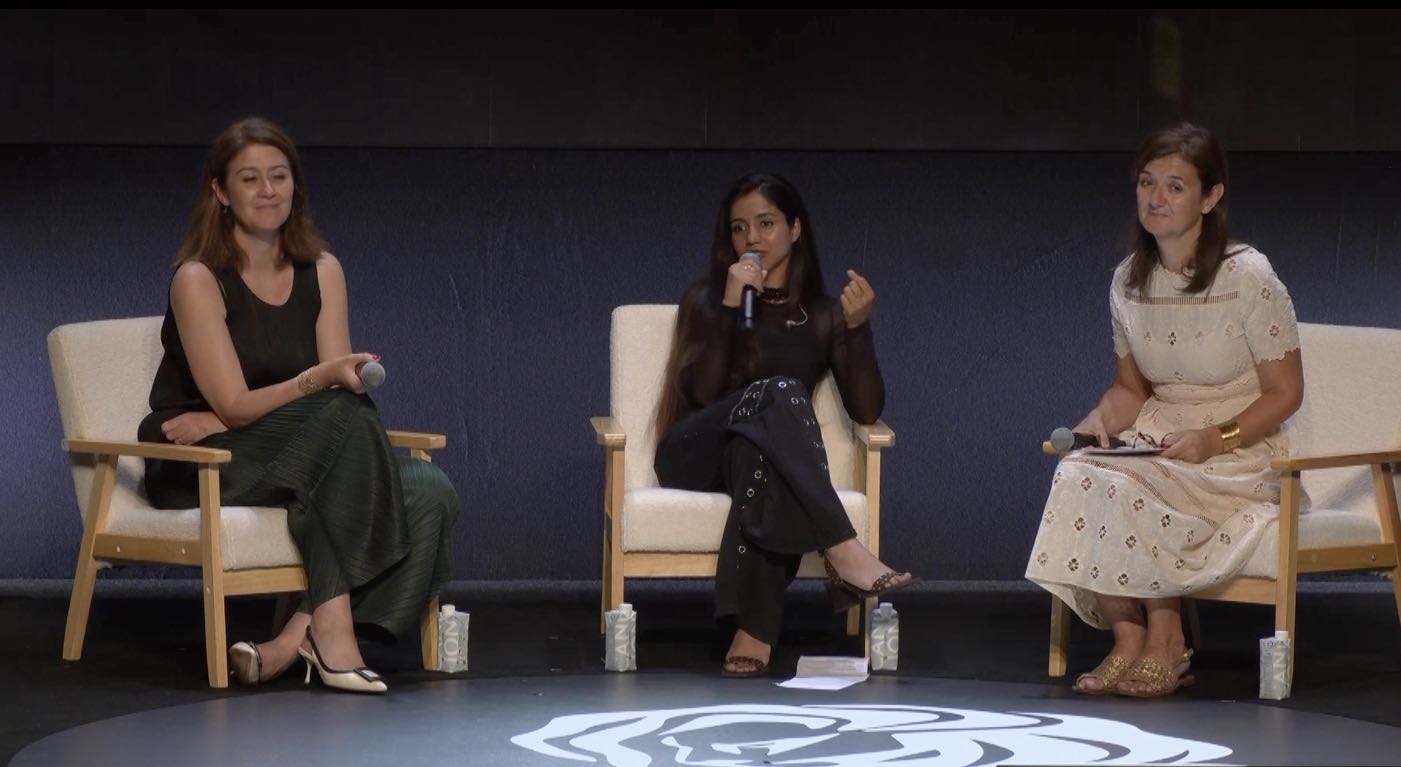
Alizadeh’s speech at Cannes Lions 2025 inspired two women — Ulrike Decoene, Access Group head of communication, brand and corporate responsibility, and Agathe Bousquet, president of Publicis France and chief executive of Leo Worldwide — to work with her to develop a music video that featured the voices of many individuals.
Prior to attending Cannes Lions in 2025, Alizadeh had written a song to honor her friends back in Afghanistan that she hadn’t heard from in many weeks (this being in the wake of the 2021 takeover of the country by the Taliban).
That song was called “Can Someone Find My Friends?” It referred to the friends that Alizadeh lost because of child marriage, because of displacement, because of war and all the problems happening in that corner of the world.
“And then we decided to use this song as the basic [foundation] of our work,” she says.
Decoene and Bousquet were able to secure the services of a music producer who came up with lyrics that “really got Sonita right away, blending his own influences with [her] Afghan music roots,” according to Decoene.
When she heard those tracks, Alizadeh “just fell in love with them because it just represented the emotion, the message that I wanted to deliver, and then I went to London to record the track.”
The pièce de résistance for the song, though, was enlisting the public to provide a “global chorus,” according to Bousquet.
“The idea was to have people to donate their voices, so we created a filter to let people sing along to Sonita’s chorus” Bousquet says.
I think for us to really make a positive change, we have to talk to men first, to support women, because in Afghanistan, women do not receive any support from men, and this allows the Taliban to continue oppressing women.
Alizadeh says she put out a call on TikTok, “inviting people from around the world to sing for Afghan women who are basically forced to not speak for themselves, forced to not exist.”
Those voices were all collected and mixed into a single chorus, and the videos were kept to be featured in the music video.
Bousquet says they chose UNICEF as their charity partner because the organization “is one of the few NGOs still working on the ground for over 75 years to protect girls’ access to education.”
Consequently, “across every touch point of our activation, we added a UNICEF donate button so that people wanted to contribute, could donate on top of giving their voice,” Bousquet adds.
The song achieved 61 million total views on TikTok and YouTube, according to Decoene.
“The song crossed borders, thanks to a special 10-minute feature in TV 5 Monde, the global French speaking channel, reaching more than 64 million people,” she adds.
The song also reached political decision makers, according to Decoene. A French member of parliament shared Alizadeh’s message and invited her to the French National Assembly to discuss women’s rights in Afghanistan.
“That was just the beginning for us,” according to Alizadeh. “We talked a lot about backing the U.N. initiative to recognize [the] gender apartheid [being committed in Afghanistan] as a crime against humanity.”
Alizadeh’s proudest moment came when the song was broadcasted to Afghanistan.
“My song was broadcasted by radio Begum and TV Begum,” she says. “The most beautiful thing about this is that this is founded by Afghan woman, for Afghan woman, and it reached 10 million women with a message of hope.”