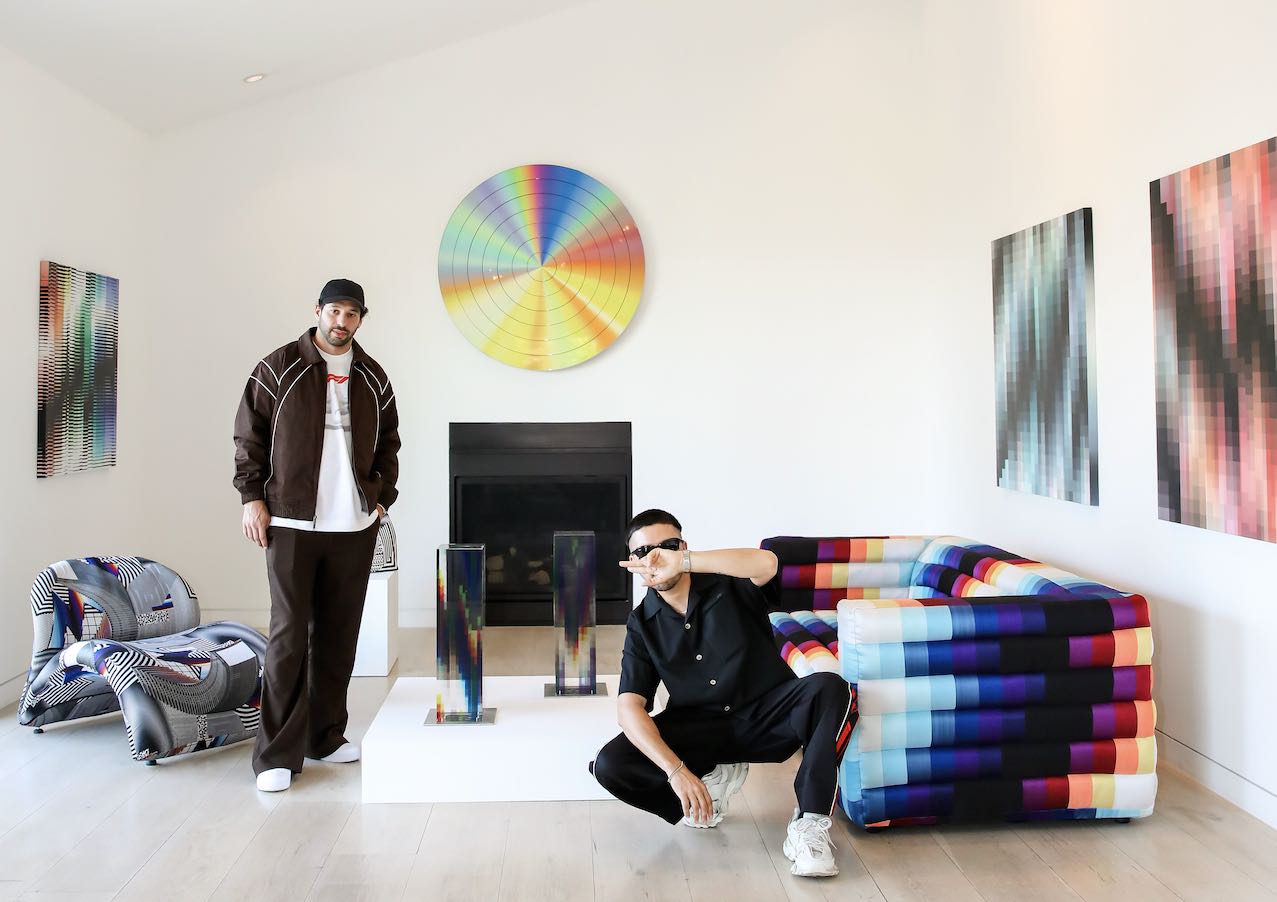

Argentine-Spanish contemporary artist Felipe Pantone recently collaborated with Israeli American luxury fashion designer Etai Drori on an exhibition that blended their two unique art styles into what some could call culturally fluid.
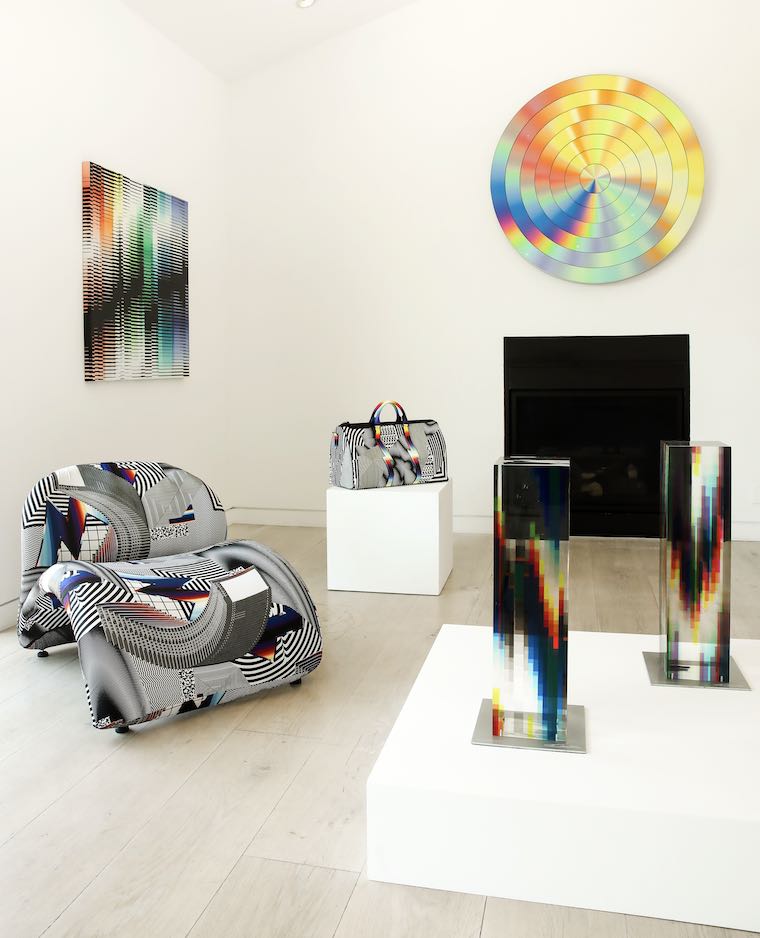
“Parallel Practices: Tailored Structures & Kinetic Surfaces” united Pantone, internationally recognized for his groundbreaking explorations of color, movement and visual systems, with Drori, a rising and highly sought-after voice whose practice operates at the intersection of fashion and design.
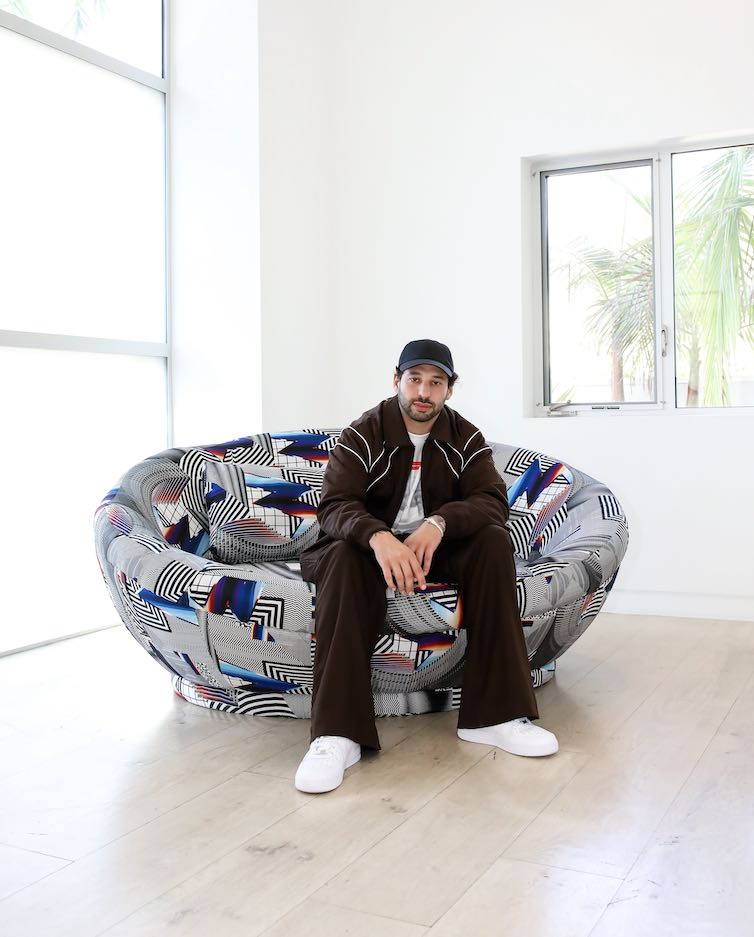
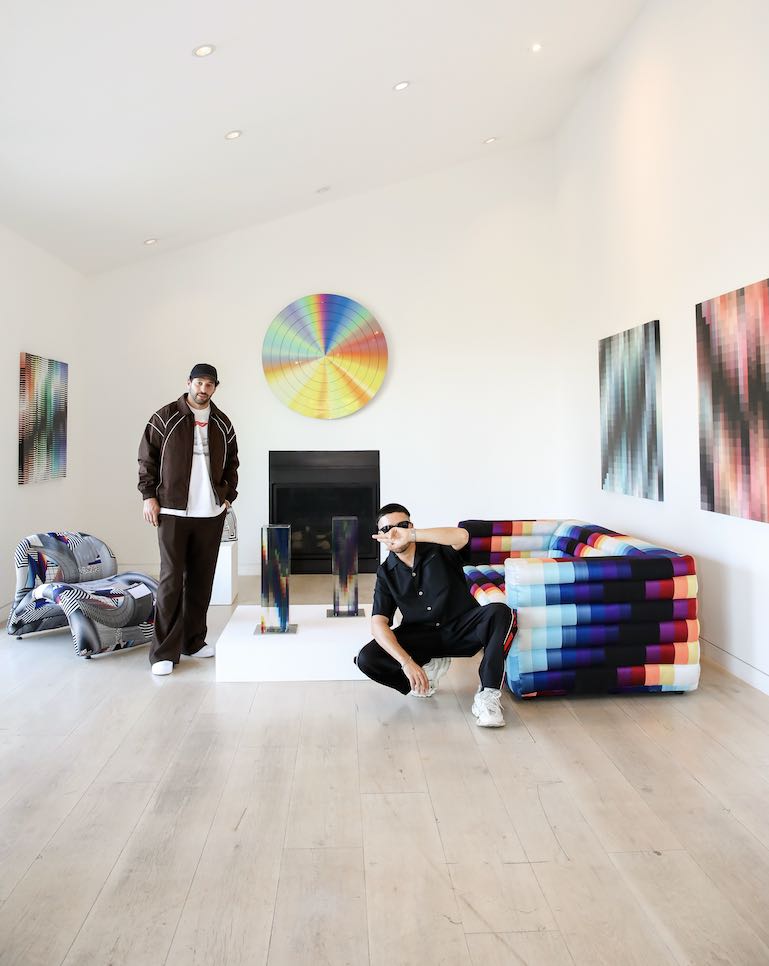
Set within the domestic architecture of the albertz benda gallery in Los Angeles, Calif., U.S.A., the exhibition brings together Pantone’s wall-based artworks and a series of collaborative design pieces presented throughout the gallery, housed in a mid-century modern home. Through their distinct yet converging practices, the artists pose questions of use, intimacy and lived experience, positioning each work as part of an interconnected artistic system rather than a singular object.
While rooted in different disciplines, both artists share a commitment to craft, precision and the productive use of tradition as a working tool rather than a constraint. Rather than approaching collaboration as a stylistic fusion, Pantone and Drori — whose mother is an Adult Third Culture Kid and an acclaimed fashion designer herself — engage in a process of structural dialogue, one that preserves the authorship and methodologies of each practice while allowing for moments of friction, overlap and translation.
The exhibition debuts a new body of collaborative design pieces developed by Drori and Pantone. Beginning with mid-century furniture sourced across Los Angeles, Drori digitally maps and reworks each object as the basis for transformation.
NEGOTIATED BALANCE
Pantone, born in Buenos Aires, Argentina and raised in southeast Spain, designs custom fabric elements, produced by the Italian textile house Limonta, which are incorporated through a process of deconstruction and reconstruction. The collaborative works emerge through a negotiated balance where systems of design, image-making and material production are continually tested and recalibrated. The resulting works integrate contemporary imagery with classic design structures, reimagining each object while preserving its original logic.
“Etai and I met the way graffiti people meet: by admiring each other’s work,” Pantone says. “We come from the same tree — something like the second generation of one of the most legendary crews, him in Los Angeles and me in Europe. The first thing we made together was a limited edition of leather goods: a duffle bag and a few more pieces. This exhibition grew out of that.”
Alongside the reimagined design objects, Pantone’s wall-based kinetic works function as both visual anchors and conceptual accelerators within the exhibition. Their optical effects, driven by rhythm, repetition and velocity, echo broader systems of data flow, digital circulation, and contemporary visual consumption. Their chromatic structures and surface effects establish a visual language that is carried into the printed fabrics used throughout the exhibition.
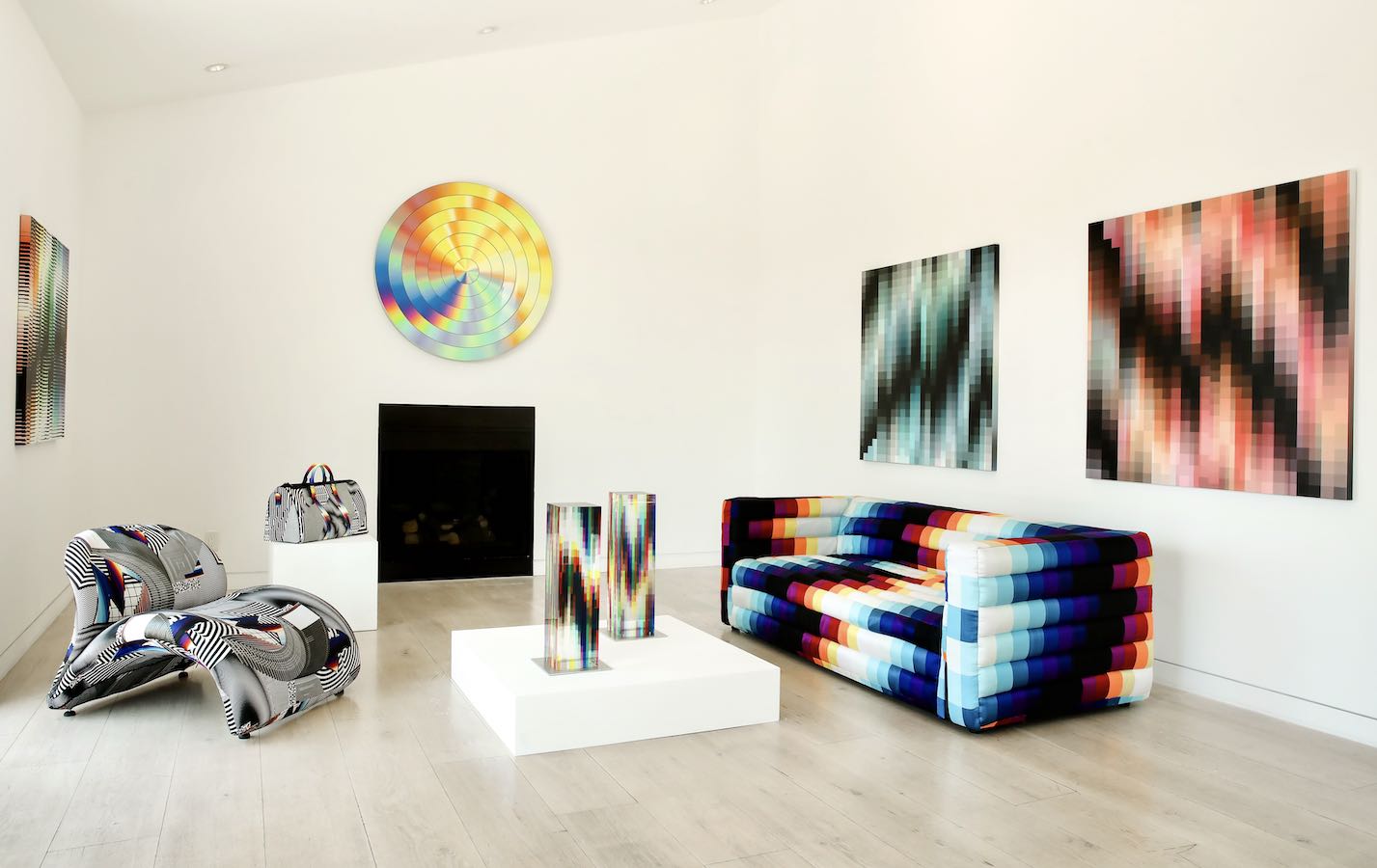
Presented in close dialogue, Pantone’s artworks and the collaborative design pieces form a unified environment across the gallery. Furniture and wall-based works are arranged as an interconnected system rather than as discrete elements, emphasizing continuity, exchange, and visual coherence across media.
Through a sustained exchange between disciplines, “Parallel Practices: Tailored Structures & Kinetic Surfaces” reframes collaboration as a generative force that expands the possibilities of both art and design.