




When it comes to keeping young girls involved in sports, two contrasting facts always come to light: (1) Girls drop out of sports at twice the rate of boys by the age of 14. And (2) 94% of women in senior leadership positions played sports through their teens.
The problem here isn’t about awareness — there are multiple, ongoing campaigns and initiatives meant to get girls not only involved in sports but to stay involved in sports all the way through adulthood.
Here’s one from Nike:
… and another:
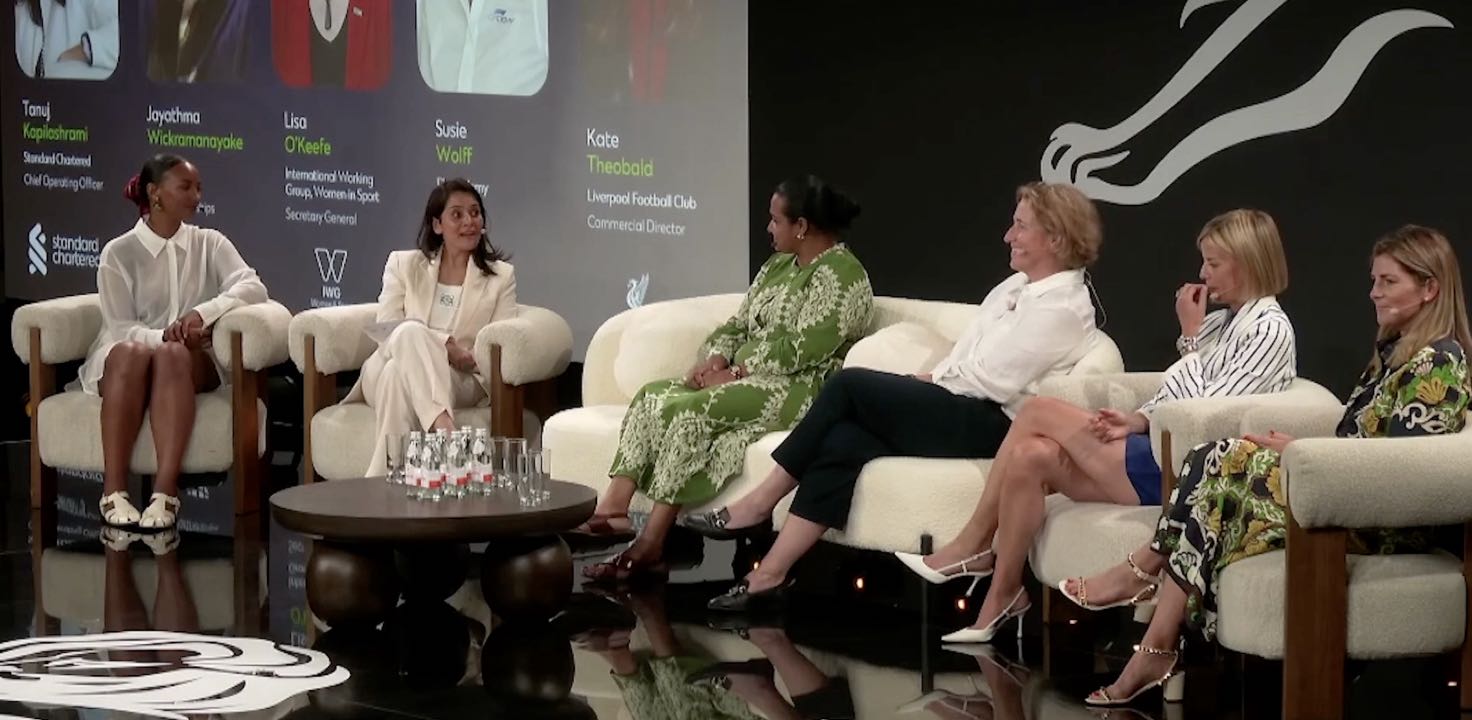
Getting girls more involved in sports was the topic of a panel at the 2026 Cannes Lions International Festival of Creativity.
“The issue we are discussing is not a new issue,” says Tanuj Kapilashrami. “We’ve been speaking about this issue for a very long time.”
Kapilashrami, a Third Culture Adult who has lived in Hong Kong, Singapore, India, Dubai and London and currently works for Standard Chartered as that company’s group chief operating officer, says what’s been missing in this space has been “sustained action” and “true systems change.”
Standard Chartered is in some of the fastest-growing emerging markets in the world, and given the position it has in many of these markets, the bank has been able to look at this issue “from a global perspective,” according to Kapilashrami.
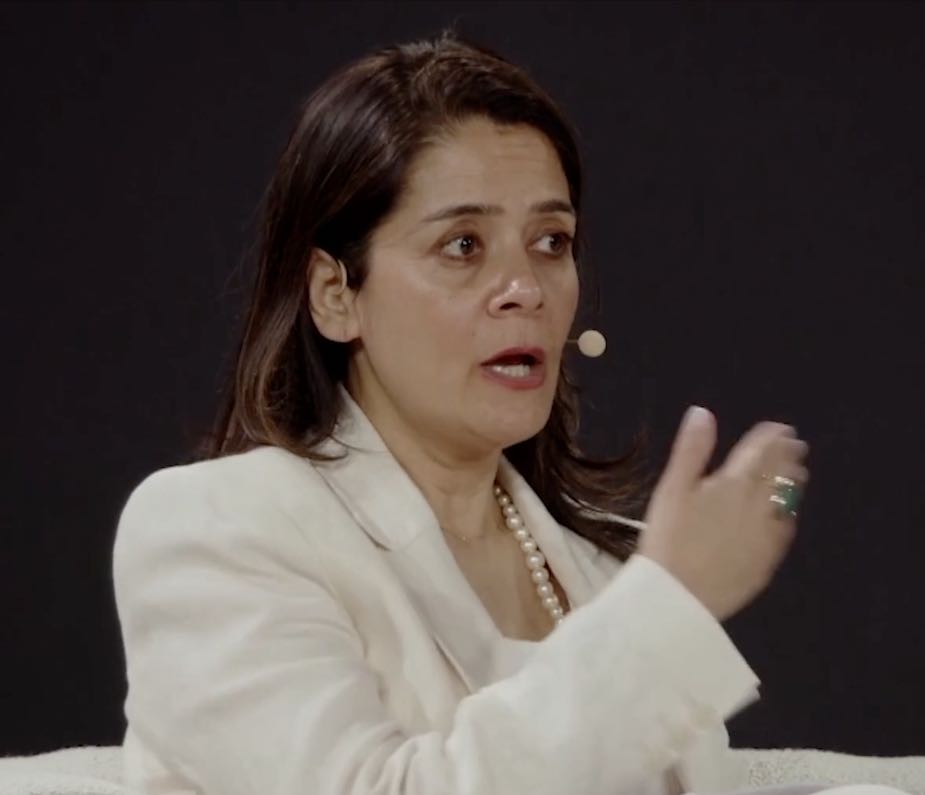
While it may be a “global issue” and a “global problem, the underlying dynamics in each of the markets are quite different,” she says.
The reasons young women and girls drop out of sports, and what it does to them in life, be it their earning potential or their ability to take on C suite jobs, etc., really vary, she adds.
Standard Chartered conducted a study across India, Kenya and Vietnam — the first-of-its-kind research in global south markets — right around the time when it launched “Play On,” its joint initiative with Liverpool Football Club and the LFC Foundation.
That research “was absolutely fascinating,” Kapilashrami says. “What it told us was the problem is the same,” although the underlying issues are different.
Those issues had a variety of factors, including safety, real and perceived vulnerability, verbal assault, violence, menstrual cycles and puberty, she adds.
“While there was technical education on these topics — what does it practically mean as young girls go through puberty and go through periods, and how they continue to play sports — that practical knowledge did not exist,” she says.
We’ve been speaking about this issue for a very long time.
In many countries, young girls bore a “disproportionate amount of burden as far as gender[-based] chores, and that impacts their ability to play sports.” Other factors like body consciousness and varying ideas on femininity between different countries also have an impact on young girls playing sports, according to Kapilashrami.
Unless parents play sports themselves, the benefits of sports are hidden much more for young women, she says.
“It’s very difficult for parents to be able to understand why young girls should continue to play sports if they don’t believe that they’ve got the potential to turn professional or become pro,” she adds. “Those were some of the key factors that came up when we did the research.”

Over the years, a plethora of advertising campaigns have been made to try to address the issue.
“Don’t get me wrong, right? We all love a good campaign,” Kapilashrami says. “I think campaigns create emotional moments. They create that awareness which is important, but what campaigns don’t do, what campaigns don’t do alone, is create systems change. And I think we’ve all reached that realization, individually and collectively, that while campaigns can take us so far, to go further, we need to drive real systems change.”
The problem is that to achieve systems change, collaboration is needed.
“No one organization can do it alone, and how do we get public, private sector, how do we get sports clubs, government organizations, NGOs, media coming together to address this challenge in a collective way?” she asks.
GETTING IT WRONG BEFORE GETTING IT RIGHT
For Jayathma Wickramanayake, a senior policy advisor on sport partnerships at U.N. Women, international institutions like the United Nations tend to try to assume what’s best for girls.
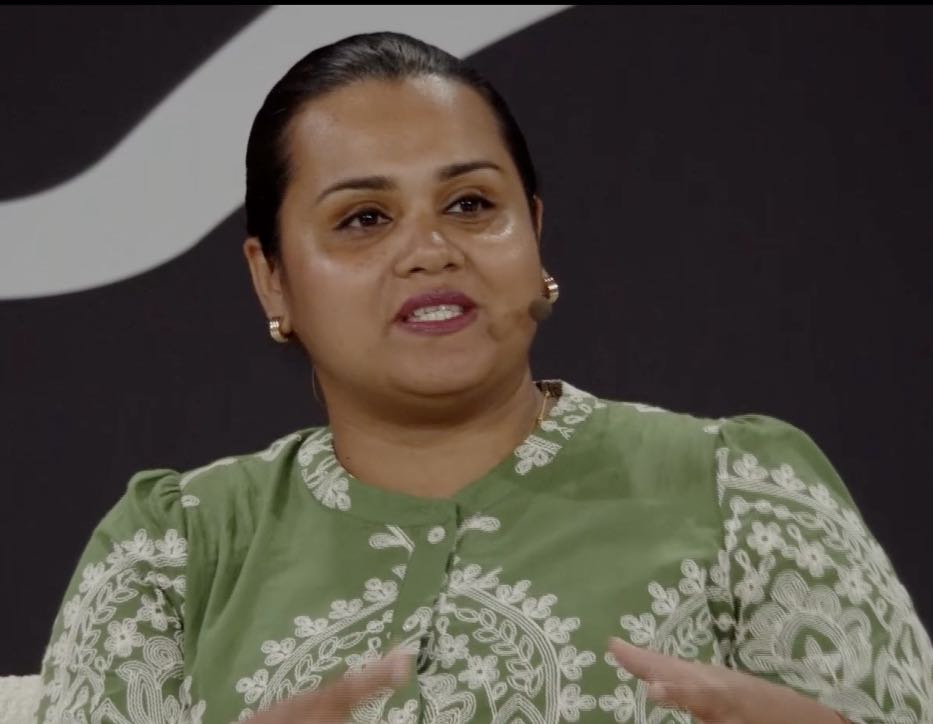
“We try to assume what’s best for young people and children without directly asking them what matters to them,” she says, adding that the work done by Standard Chartered across those key markets “give us critical insights to really flip the question: It is not that girls are dropping out of sport. It is that girls are being pushed out of sport at the age of 14, at their teenage years, because of structural issues, because of negative social norms in their societies, that really does not keep the right conditions for them to continue to enjoy sport, thrive in sport, and through that, be productive citizens in their communities and economies.
“So for us, it’s important that we do this work collectively with girls in communities,” Sri Lanka-born Wickramanayake continues.
In Brazil, Argentina and the Pacific islands, Wickramanayake says UN Women partners with organizations to integrate sport into the programmatic work the organization does “to help girls thrive in societies, whether it is using football as a tool to get more girls into education, because as Tanuj said, numbers show that when girls play sport, it’s likely that they will stay longer in school. It’s likely that we can prevent child marriages. It’s likely that they will get married late. They will have children late, so that they can complete their education and be productive citizens in society.”
Consequently, for international and development institutions, it’s important to “flip the question the other way around, and look at what are those conditions that need to be created. What are those barriers that need to be removed?” she adds.
It is not that girls are dropping out of sport. It is that girls are being pushed out of sport at the age of 14.
Knowing that the U.N. and governments cannot do this alone, Wickramanayake asks: “How do we work collectively, with sports organizations, with brands, with role models … to really shift those stereotypes, negative social norms, attitudes and behaviors towards girls in communities, so that we can keep more girls longer in sport, and look at them becoming CEOs, high-profile politicians and individuals that can influence and change our societies for good?”
‘RADICAL COLLABORATION’
When it comes to getting that help, Wickramanayake calls for “radical collaboration.”
“I think we are all very used to joining alliances, getting membership in different initiatives, rallying around a topic or meeting to discuss issues,” she says. “But what does it truly mean for us to change the way we operate, change our internal systems, change our internal structures for us to collaborate, not at a superficial level, but at a transformational level, where all of us contribute towards the common goals?”
This is where initiatives like the Play On campaign has become the platform for that radical collaboration, according to Wickramanayake, “where we can bring in sports organizations to commit that they will do these exact things, to get girls into sport and retain them in sports, where we can come in as the U.N., remind governments where the commitments they have made to invest in girls sport, and to make sure that those laws, those regulations are implemented, so that we follow through in those commitments.”
FEAR OF JUDGEMENT
Another factor keeping girls from continuing in sports is the fear of judgement.
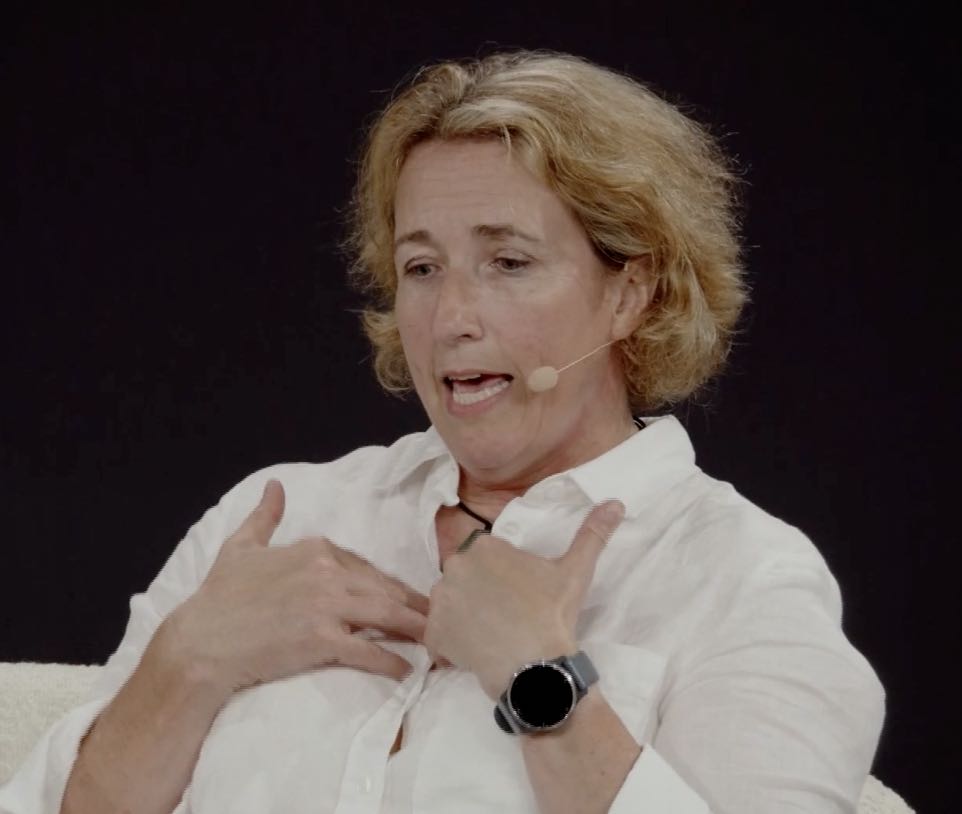
Lisa O’Keefe, a former international rugby player and currently the secretary general of the International Working Group on Women and Sport, has seen “the good and the bad of sports” throughout her career.
One of the best things O’Keefe says she has been involved in is the creation of a campaign called “This Girl Can,” which champions equality and participation across sport and physical activity.
“I’ll be honest, when we created it, I learned a huge amount through that process because the research told us a lot about fear of judgment and the impact that that had on women and girls, whether they were incredibly active or inactive, the whole spectrum,” she says.
O’Keefe says helping create a campaign where it talked about the fear of judgment and reassured women — and men as well — “that we all have a version of this, and that’s OK, that we’d somehow all get over it,” was “naïve” on her part.
“Of course, what I realized was, and the research told me, that people who are regularly active just have a way of coping with that fear of judgment,” she says. “And that was when I realized that actually, I was looking at this so wrong, because it isn’t about fixing the women and girls — it is about fixing the system, as my colleagues have said.
“So for me, that meant conversations with the people who were providing sport around the country, to look at how that sport was being provided, and ask them how we could do that differently, to meet the needs of the target audience,” O’Keefe adds.
INVESTING IN WOMEN’S SPORTS
While a lot of people may want to be involved in promoting girls and women in sports, when O’Keefe talks to anybody trying to actually do that, she finds: “Everyone’s existing on fumes.”
She readily admits it’s a “difficult” economic climate that people are working in.
“I’m a realist about it,” according to OKeefe. “But when we look, there are more strategies and action plans and programs with ‘women, girls and sport’ in the title than I have ever seen in 30 years. And when we analyzed them all, we found that just over 50% of them had no budget attached to them, and 70% of them had no evaluation.
“That tells you everything, doesn’t it?” she continues. Women’s sports is an emerging market, with some sports emerging quicker than others, “and in some markets, it’s emerging quicker than others.”
More women and girls being active can have “massive social returns,” O’Keefe adds. “If ever there was a time to invest, it is now.
“And that’s my big, big ask: If you’re serious about this, you need to invest, and as my colleagues have said, not for the short term — we’re gonna be in it for the medium to long term, because that’s what will create the cultural change.”