For writer/director Joey Clift, loving video games and loving his Indigenous culture don’t have to be mutually exclusive.
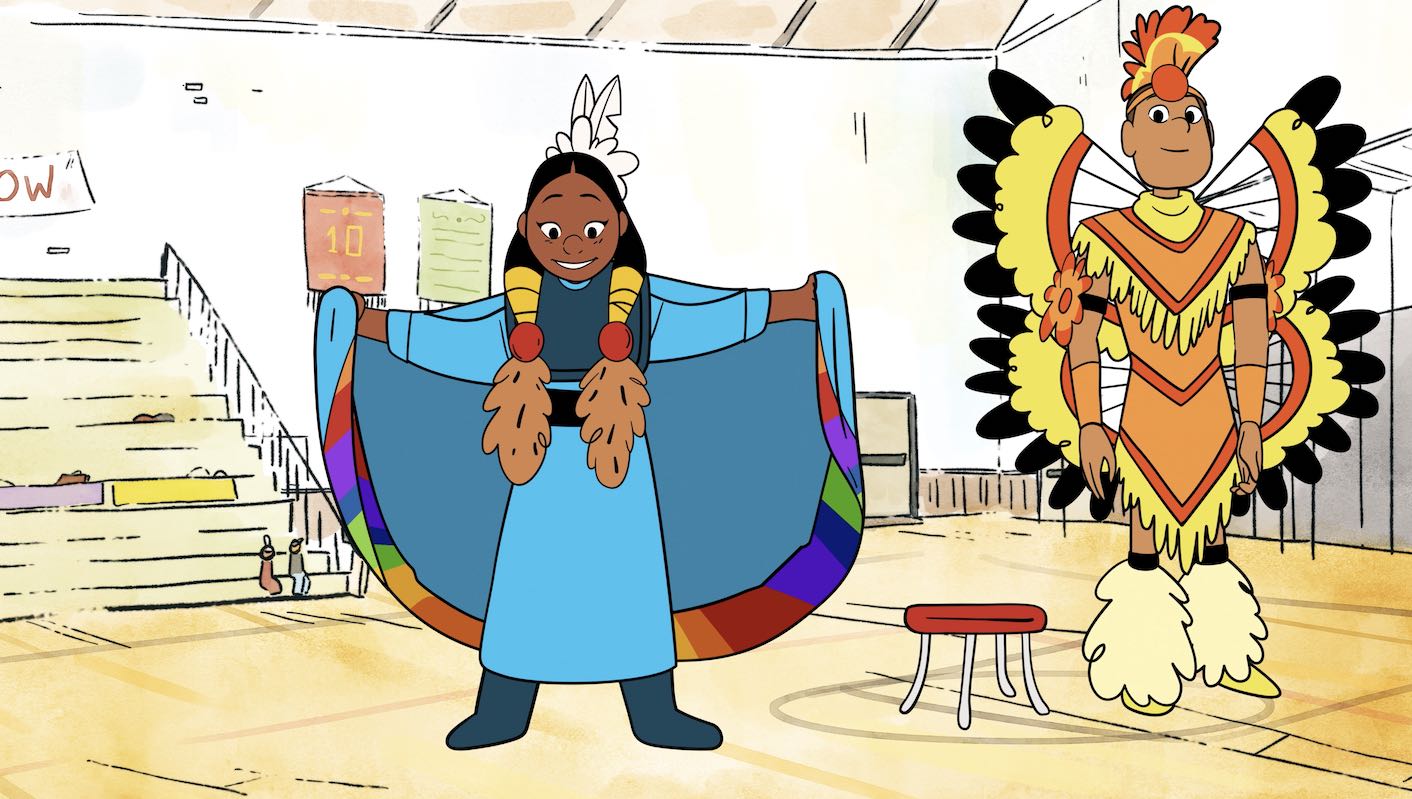
Clift’s new animated short film “Pow!” shows a Native American kid scrambling to charge his dying video game console at a bustling intertribal powwow.

Clift, an enrolled member of the Cowlitz Indian Tribe, says “Pow!” is a love letter to his time spent as a bored Native kid, often dragged by his mom to Indigenous cultural celebration events called powwows in tribal centers on the Tulalip Indian Reservation in Washington State, U.S.A., where instead of powwow dancing, he mostly searched for places to charge his Game Boy.
In his career in the animation industry, Clift says he often has to separate his Native identity from his work.
“This is an industry where, for nearly a century, the only Native representation was either Disney’s ‘Pocahontas’ or animated shorts about cowboys shooting at Native ‘savage’ stereotypes,” he says. “I’ve written a lot of cartoons, from series featuring Shrek, to Cocomelon Lane and Bugs Bunny. I love helping to make silly animated shorts with an emphasis on physical comedy, but I’ve had few opportunities to bring my authentic culture into that space.”

CULTURAL INSPIRATIONS
“Pow!” draws inspiration from a lot of different places, according to Clift, from traditional Native American art forms like Coastal Salish shape language and Plains Native American ledger art, to contemporary art styles like anime, 16-bit Super Nintendo pixel art and classic U.S. slapstick cartoons.
This is an industry where, for nearly a century, the only Native representation was either Disney’s ‘Pocahontas’ or animated shorts about cowboys shooting at Native ‘savage’ stereotypes.
“We use a mix of three different animation styles to tell our story in a way that is as nuanced and different as the perspectives our characters have on powwow culture,” Clift says.
The film’s first scene is animated as 16-bit pixel art, to represent the video game-centered lens the protagonist uses to view the world.
LEDGER ART
As the powwow begins, the art switches to a mix of hand-drawn and computer animation with watercolor backgrounds to show the vibrancy and joy the protagonist’s parents see in powwow culture. A later flashback sequence switches to a “ledger art”-inspired animation style.
Ledger Art originated in the 1800s by Midwest North American Indigenous tribes. When those tribes were forced onto reservations by the U.S. Army, the only paper they had were left-behind military ledgers and notebooks, so they drew on top of the old military notes, literally replacing their trauma with art, according to Clift.
We use a mix of three different animation styles to tell our story in a way that is as nuanced and different as the perspectives our characters have on powwow culture.
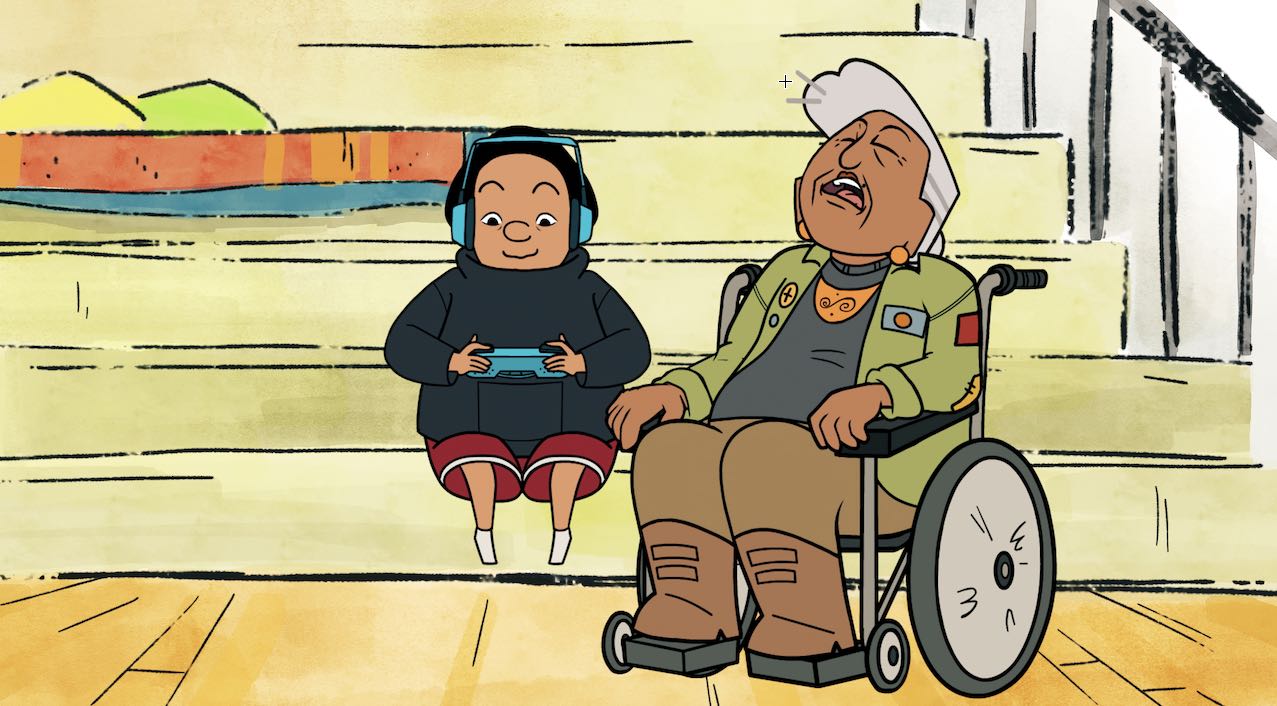
“Our film is one of the first times ledger art has ever been seen in animation,” he says. “We chose that style to honor history while also showing the complicated and layered perspective our elder character has on her culture. We even sourced archival audio from the 2016 Standing Rock protests, scans of actual broken treaties between Tribes and the United States government, and partnered with a team of powwow and Coastal Salish consultants to bring authenticity to the short.”
The largely Indigenous filmmaking team had one goal in making the movie, according to Clift: “To create the sort of positive, contemporary and joy-filled Native representation that we wish we had as kids.”
Many aspects of Native culture and history are represented in “Pow!” that an average person may not be educated about. The filmmakers have created a short, informative slideshow presentation, as well as a behind-the-scenes, making-of featurette to take viewers through the work that went into making “Pow!” authentically, with Native creatives at the forefront.
Check out the trailer below.