

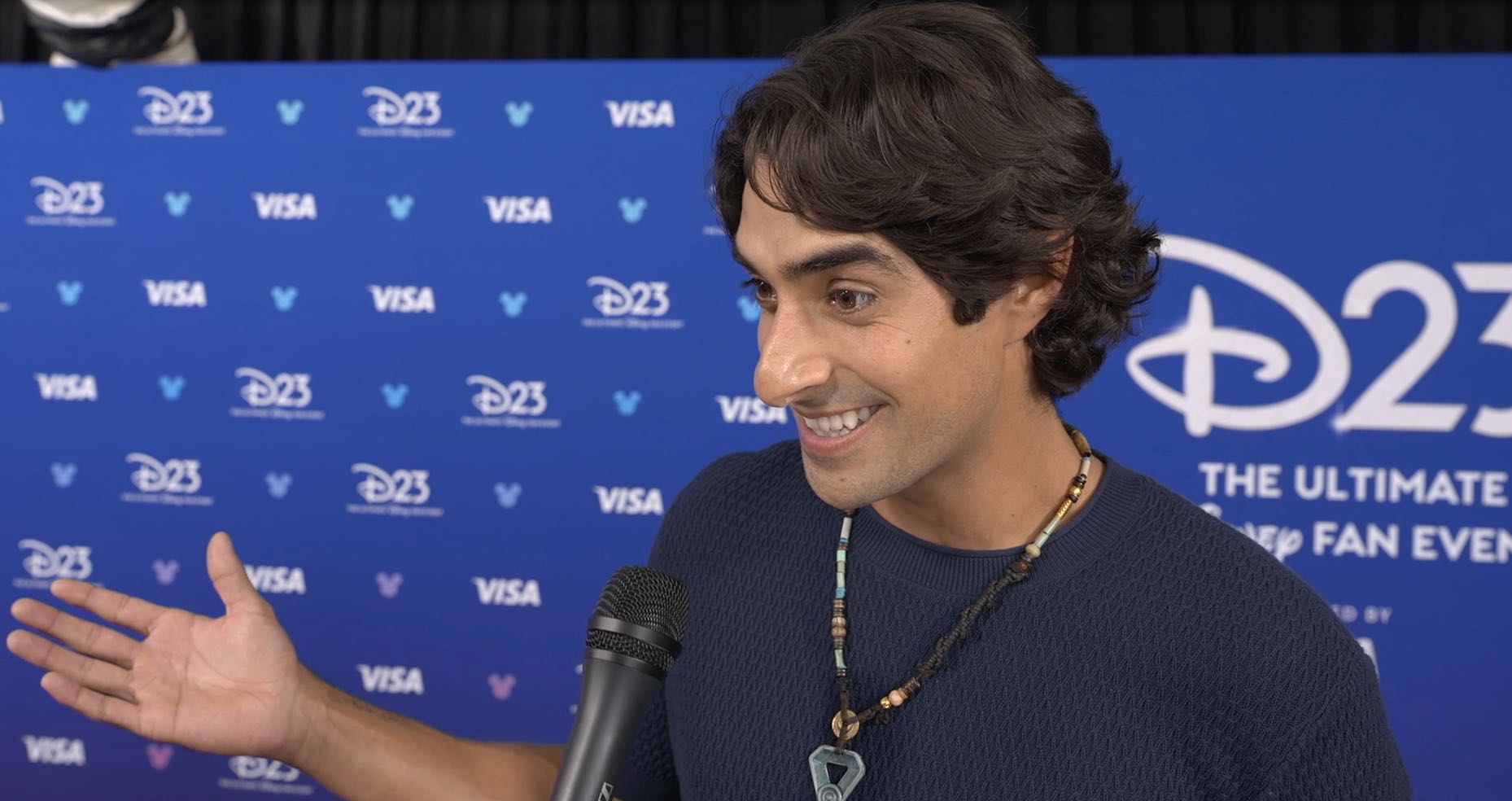

Eman Esfandi came very close to abandoning his acting career, and part of the reason for getting that close was due to casting agents not being able to figure out “what” he was.
When he first moved from his home U.S. state of Texas — where he had built a moderately successful list of credits in local TV commercials and student films — to Los Angeles, Calif., U.S.A., “the assumption was, awesome,” Esfandi says in an interview on an episode of “The Rogue Pod” podcast.
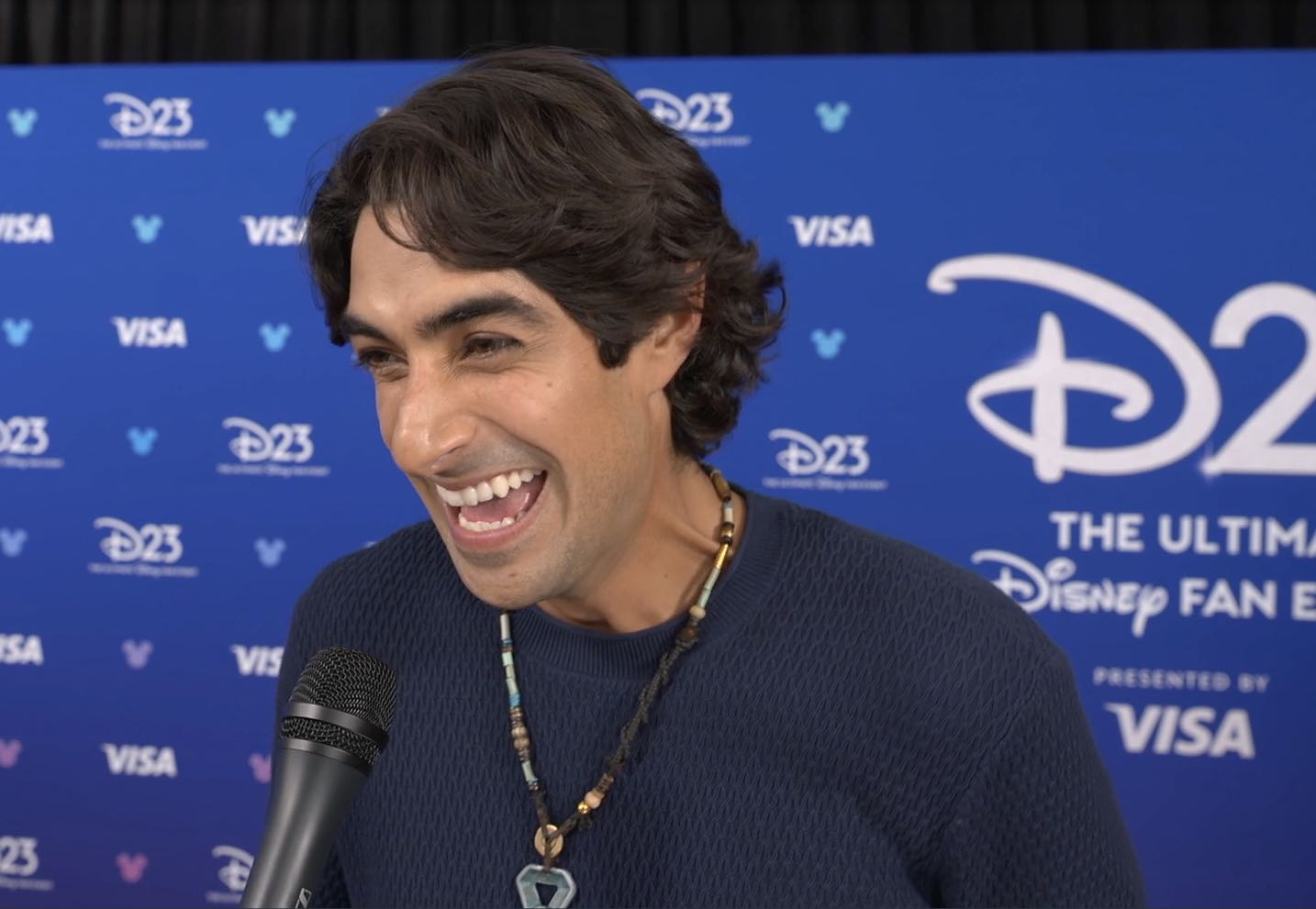
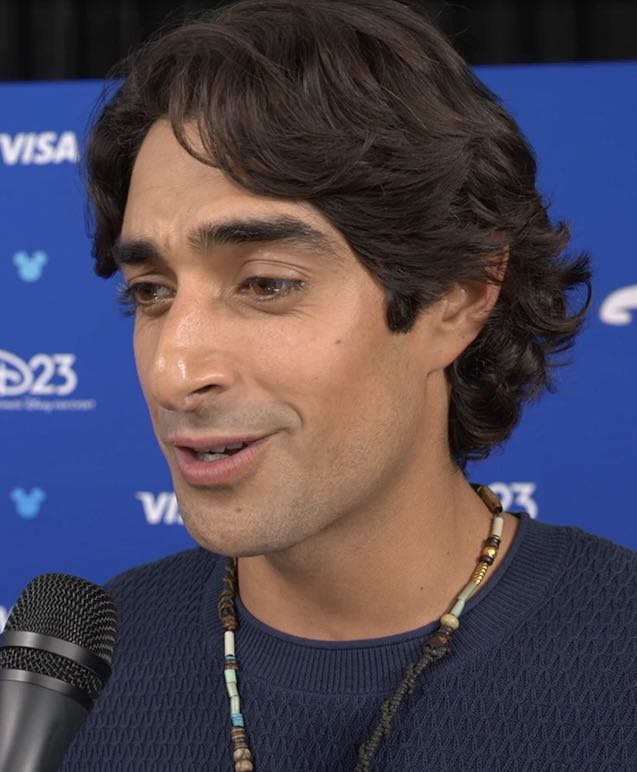
Eman Esfandi at the 2026 D23 Entertainment Showcase (Photo courtesy Walt Disney Pictures)
“Now I’m gonna book roles, bigger roles, real roles, and real projects, because I am half Ecuadorian, half Latin, half Persian, half Middle Eastern,” the culturally fluid actor says. “They’re going to be looking for me in L.A., you know? They’re looking, and diversity was all the rage.”
But when Esfandi, whose mother is Ecuadorian and father is Persian, was — earlier in his career — auditioning for, say, a Latinx role, the casting director would tell him he wasn’t Latinx “enough.”
“Even though I’m half Ecuadorian, and can speak fluent Spanish, it’s my first language, grew up on the border of Mexico, and Laredo, Texas, not Latino enough,” he says.
“I can’t get the Latino roles because I don’t look Latino enough, and you’re saying I’m not fully Persian, so I’m not Persian enough either,” he says.
And if Esfandi did get called in for auditions for a Persian or Middle Eastern character, more often than not, they “were very specifically stereotypical about being Middle Eastern, being a terrorist. Being some sort of villain or just vile character [with] poor morals.
“I’m like, this is so insulting,” he continues.
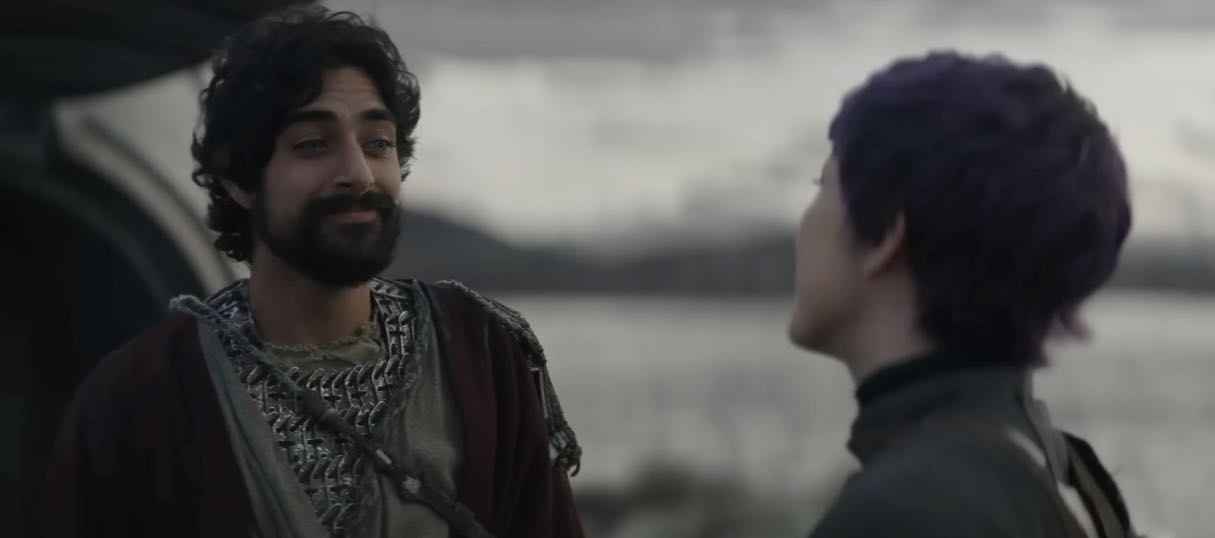
Esfandi, who plays the live-action Ezra Bridger on the Star Wars/Disney+ series “Ahsoka,” remembers interacting with one of the top casting directors who deals with Latinx actors. He readily admits that that director telling him that he didn’t look Latinx “enough” was “really her just echoing what the industry feels a Latino should look like.”
“At the time, I felt very offended,” he says. “But really, it’s just that she was an echo of the industry at the time, which was Latinos look like this. Middle Eastern people look like this.”
I can’t get the Latino roles because I don’t look Latino enough, and you’re saying I’m not fully Persian, so I’m not Persian enough either.
CASTING COLISEUMS
Esfandi describes the audition scene in Los Angeles as if there were two “coliseums” in the city — one for established actors and another for everyone else.
For the established actors, “We got you. You know us. We know you. Let’s have a party,” he says.
In the other coliseum, “It’s every transplant you’ve ever heard of who moved to L.A., people from New York, people from Austin, self-tapes, first-round auditions, all that stuff.”
And the one role everyone is scrambling for is the one that says “open ethnicity.”
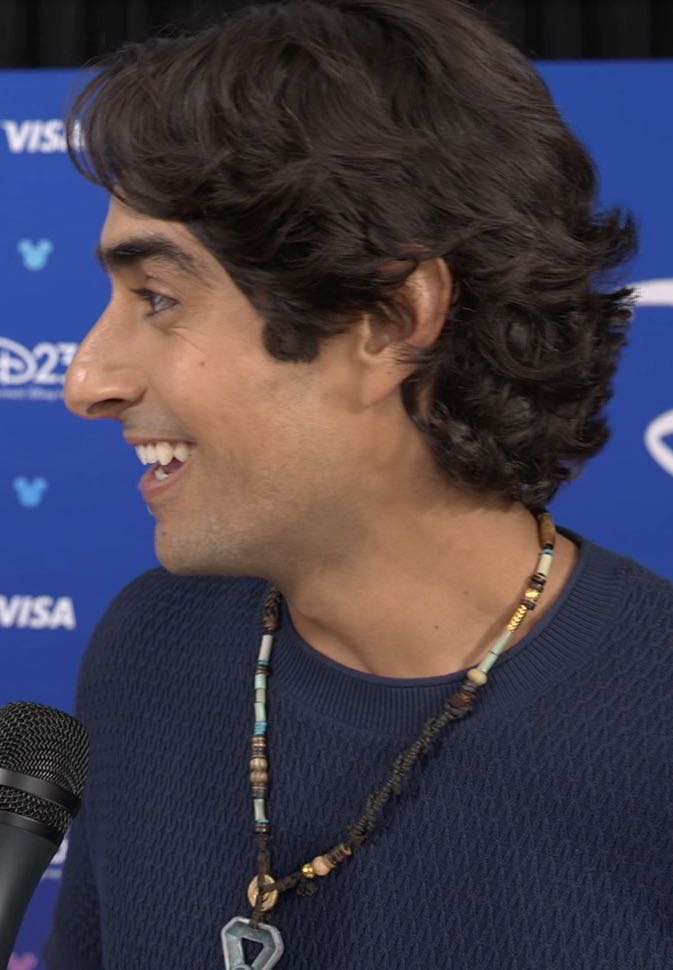
“There are 10,000 actors in L.A. going for one ‘open ethnicity’ role, a big project. And you’re all in this coliseum going for it,” he says. “So I realized, wow, OK, you either get something like that, or you’re competing with every person of color for a role that doesn’t even matter.”
Not being able to book roles because he couldn’t fit into a specific ethnic box frustrated him.
“That was my experience,” Esfandi says. “So I just was like, OK, this is so insulting. I’m depressed,” which led him to enter therapy.
“It was a sad time, man,” he says. The first couple weeks of therapy “made it very obvious and clear … acting is like the bane of my life right now.
“It’s actually my Kryptonite,” he continues. “It’s killing me, so I had to walk away for mental health reasons. I was like, I’m just not happy doing this because of the industry and whatever [feedback] I’m getting.”
Esfandi says he’s a firm believer that the world is a reflection of the thoughts you carry.
Nowadays, he takes responsibility and accountability for “believing in the idea that the industry wasn’t ready for people of color.”
“I bought it, and then I saw it, and so I bought it even more, and I just spiraled into this negative belief about industry, about Hollywood, and I was like, ‘Yeah, I don’t want to do that. I don’t want to do that. I don’t want to represent anyone who looks like me in a role that I think is insulting,'” he says.
Consequently, even though he had booked several parts in film and television, Esfandi stopped auditioning for roles for six months.
“I just told them, ‘Hey, I’m done acting. I’m done.’ I told my manager and agent, ‘I’m done. I’m just gonna make music now.’ Because with music, at least you’re yourself. You represent yourself,” he says, adding: “You get to be exactly who you are, and there’s no tie to your ethnicity. There’s no need to acknowledge it. You just get to express yourself as an artist. So, yeah, that was why I left.”
The time he left was right around when the COVID-19 pandemic began. What saved him was music and tennis. An earlier ambition during his university days when he was on the tennis team was to become a professional tennis player. When that didn’t pan out, he began teaching tennis, and after that started taking an acting workshop.
Getting back into music, though, “I feel like it saved my life, truly,” he says. “And then I think it saved everything else because it taught me who I was and what I wanted and what my vision for myself was, and then everything else came flooding in: My tennis improved, my acting blew up, and my life just improved.”
I don’t want to represent anyone who looks like me in a role that I think is insulting.
Esfandi looks at music as an integral part of a “Holy Trinity” which is tennis, movies and music.
Music “was such a dissection of all the pieces of myself,” according to Esfandi.
Right around that time, he had heard rumblings about an animated character that fans said he looked like: Ezra Bridger was one of the main characters in the animated series “Star Wars Rebels.”
“What do you mean there’s an animated character that my 14-year-old self also looks like and the older version looks like me as well? That’s a ridiculous alignment,” he says.
AUDITIONING FOR EZRA
Once he’d heard about the character, Esfandi began watching “Star Wars Rebels” on Disney+.
“As soon as Ezra comes on, it’s as if someone showed up in the room, not visually, but just like energetically. I was like, ‘Huh,’ and I paused the TV.”
By this point in his life, Esdandi says he had had “some very strange experiences” dealing with people he knew who had died, seeing them in “dreams” and “visions,” along with “hanging out with a lot of spiritual people, psychics, mediums, healers, a lot of that kind of stuff.”
Those experiences were “great. It was very healthy and it was a lot of great insight,” he says.
The character of Ezra Bridger just kept popping up for him, and “I was also kind of like, ‘Dang, I must be losing my shit,’ you know? I must be going crazy. Too much time alone in this pandemic.”
That vision of Ezra told Esfandi that “he wants to play through me.”
Consequently, Esfandi emailed his agent and managers with three pictures of cartoon Ezra and three pictures of him “and I say, ‘Hey, when they cast for Ezra Bridger, Jedi and Star Wars, I will play him.”
His manager responded, asking “‘Hey, is this one of your woo-woo things?’ And I’m like, ‘Yeah.’ And he’s like, ‘Well, I hope it works.'”
After that conversation, Esfandi let it go. “I forgot about it.”
Six months later, he’s shooting an A24 Studios movie called “The Inspection.” In the middle of that, Esfandi gets a “dummy side audition” where he has to sign several non-disclosure agreements to audition for two scenes for a character that has no name.
Reading the audition lines makes him strongly think it’s Ezra he’s auditioning for.
After his audition video is sent in, Esfandi talks to his manager again and remembers that in 2019 he had acted on a film directed by Robert Rodriguez called “Red 11.” Rodriguez (who directed “El Mariachi” in 1992 starring Antonio Banderas) had also directed several episodes of the Star Wars Disney+ series “The Mandalorian.”
Esfandi texts Rodriguez, asking him if he knows Dave Filoni, the co-creator of the Ahsoka character in another Star Wars animated series, “Clone Wars,” and the showrunner for the “Ahsoka” live-action series with Rosario Dawson in the titular role.
Hey, is this one of your woo-woo things?’ And I’m like, ‘Yeah.’ And he’s like, ‘Well, I hope it works.’
“So I texted Robert, ‘Hey, Robert, do you know this guy?’ And he’s like, ‘Dave Filoni? Absolutely.’ I tell him, ‘Oh, I’m on avail[ability] for this character, Ezra.’
“He goes, ‘Great,’ and he calls Dave Filoni. And this was the coolest thing in the world, you know what I mean?” Esfandi continues. “Like an old connection, old filmmaker I’ve worked with, who’s also just very big too. I’m not trying to bother him and text him all the time. But he does the call, and Dave said that when he got the call from Robert, they were like, ‘All right, give him the role.’ No callback, nothing. They just offered me the role. That next day.”
FULL CIRCLE
(Spoiler warning: The rest of this article contains mild spoilers for “Ahsoka” Season One.)
What brought everything full circle for Esfandi began when he was filming a scene for the A24 Studios movie “The Inspection.” In it, he plays a Muslim U.S. citizen who joins the Marine Corps.
“There’s a scene in that movie where one of the actors sees my prayer beads while we’re all laying prone, aiming rifles at a target. It’s just a barrel, they’re prop guns,” he says.
Part of that scene involved another actor grabbing Esfandi and throwing him in front of the other characters.
“This is all part of the scene,” he says. “I’m very aware we’re going to do this. And then he starts going on this rant because he’s triggered because he’s lost friends in the movie, to the Middle East [wars], and he says, ‘Aim your guns at him, take a good look at him, ignore the uniform. This is what your enemy looks like.’
“And that [scene], as an actor and a human, hit me so much harder than I was prepared for,” he says.
It felt to Esfandi like a punch to the gut, because it was reminiscent of growing up in Texas during the 9/11 era when he was in high school.
“As soon as my name is said out loud, ‘Iman Esfandi,’ in high school, here come the jokes, the terrorism stuff, the racism,” he says. “I feel like everyone in some way, every person of color, especially in a more homogenous area, they’re going to go through that. Anywhere in the world, doesn’t matter.”
So, after finishing working on that scene, Esfandi says that particular line, “This is what your enemy looks like,” felt “like a dagger. It just popped something.”
He had to walk away and “just wept for a while.”
‘This is what your enemy looks like.’
That’s something therapy had taught him: “You’ve got to let that out.”
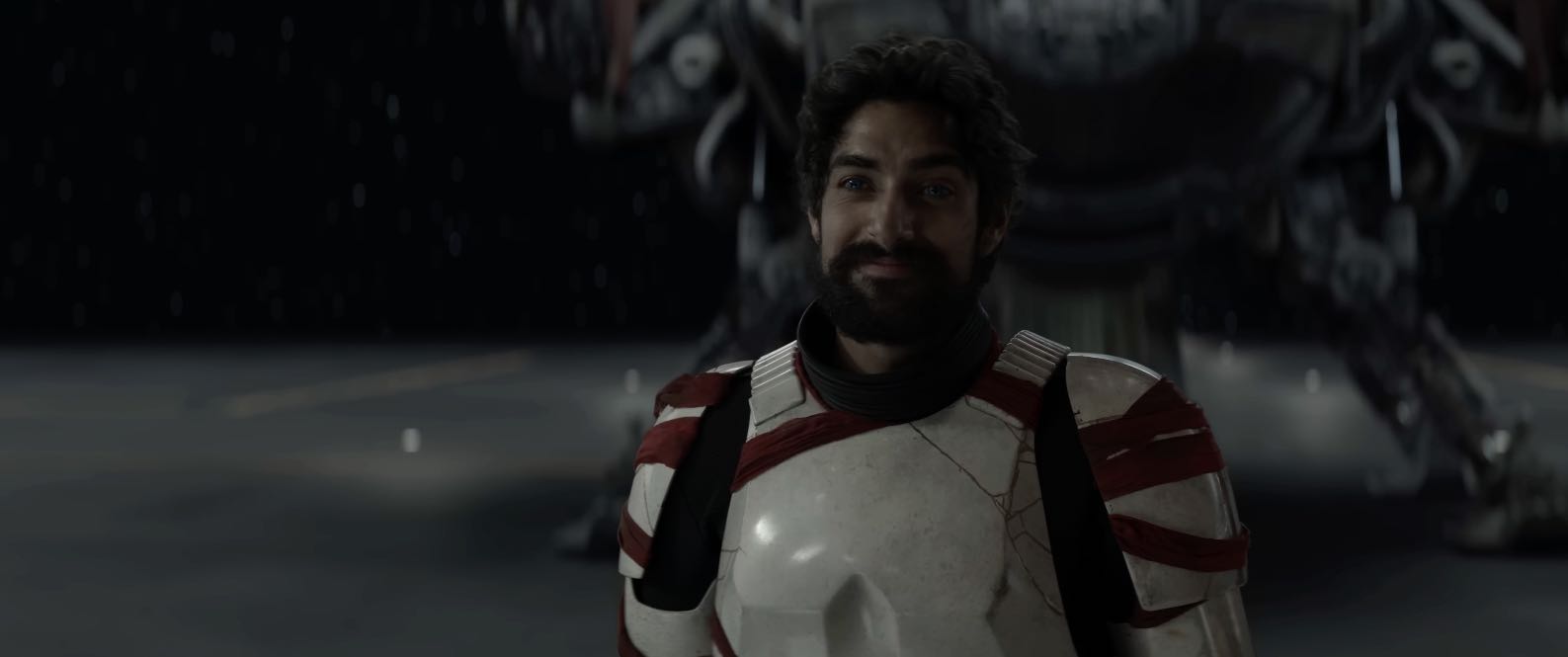
Fast-forward to Esfandi’s first day on the set of “Ashsoka” Season 1, and the scene they’re shooting is his last in the final episode of that season where he’s walking down the ramp of a starship in a Stormtrooper helmet and uniform and arriving to see his mother figure from the animated series, Hera Syndulla.
In front of him are Hera and a bunch of New Republic soldiers, pointing guns at him.
“It just hit me, the symbolism of it really hit me,” he says.
The first shots that were filmed were coverage of Hera and the soldiers reacting to him. Esfandi is walking down the ramp, his helmet visor is getting fogged up and he’s worried he’s going to miss the mark on the floor where he’s supposed to walk to.
“I walk down slow. All of them, all the New Republic people file in and put their guns up, and they’re all pointing their guns at me, including Mary” Elizabeth Winstead, who plays Hera.
“But then in this universe, I take off my helmet, and because of who I am, and because of how I look, all the guns go down,” he says. ” I saw that, and I just was like, ‘Oh, wow, I didn’t realize that would tie back to the A24 moment that hit. I almost didn’t go back to acting because of that movie. I was like, I don’t know if I should do that kind of stuff.”
Then, “something technical happened” that required the crew to film the scene again.
“I’m in my stormtrooper helmet crying because I’m like, ‘Oh, wow. It’s just really crazy, you know? To be seen as a hero in this universe.'”
Check out the full podcast episode below.