
Amy Wang, Chinese Australian director of the upcoming movie “Slanted,” has always been aware that she looked different.
One of her first memories of racism happened at the Sydney, Australia botanical gardens when she was 8 years old.
“I was there with my parents, looking at native Australian flowers,” she says. “I remembered it was a hot day and my mother had one of those parasols Asian women love to use to shield themselves from the sun. While walking around, we were suddenly approached by a white middle-aged man. He began to follow us, whispering hostile things like ‘go back to China’ and ‘we don’t want you people here.'”
Wang remembers feeling stripped of her dignity.
“The feeling was so overwhelming that I can still remember the emotional intensity so many years later,” she says. “I was made to feel like I was trespassing in someone else’s home and I had to ask permission to stay.”
After that experience, Wang says she began forming a mentality that if she “did everything right,” if she “learned English to perfection and shed every ounce of my Chinese identity, that maybe … just maybe, I’d be welcomed in.”
For the next two decades, that’s exactly what Wang did. She became the “model minority,” speaking English with no accent and becoming friends with white Australians. She refused to speak Mandarin to her parents in public and purposely chose to forget when certain Chinese holidays were.
“I tried to shed every part of myself that I thought would give away the secret that I was actually Asian,” Wang says. However, she soon realized none of it mattered because there was always going to be one thing she couldn’t change – her face.
I was made to feel like I was trespassing in someone else’s home and I had to ask permission to stay.
“Racism against Asian people has always been present,” according to Wang. “It may not have always been a violent form of racism, but it has permeated society for as long as I can remember.
“It’s a racism that makes you question your identity,” she continues. “It’s a racism that causes you to hate who you are and your own culture. It’s a racism that feeds on shame and displacement.”
As Wang got older, Wang says she grew more comfortable in her own skin and began to forget the shame that once inhabited her body. However, a mass shooting in Atlanta, Ga., U.S.A. in 2021 where six Asian women were murdered jolted a forgotten memory.
“For the first time, I felt impelled to speak up about my experiences,” she says.
Wang’s first feature film “Slanted” offers a searing and unapologetically satirical view of race and what it is to be White.
“At the heart of this movie is a Chinese girl who just wants to feel accepted as an American,” Wang says. “This is a deeply personal film that digs into your insecurities and exposes the twisted realities of a fractured identity. I have made this movie in the hopes that by exposing my wounds as a Chinese Australian woman, I can help others heal their own self-doubt.”
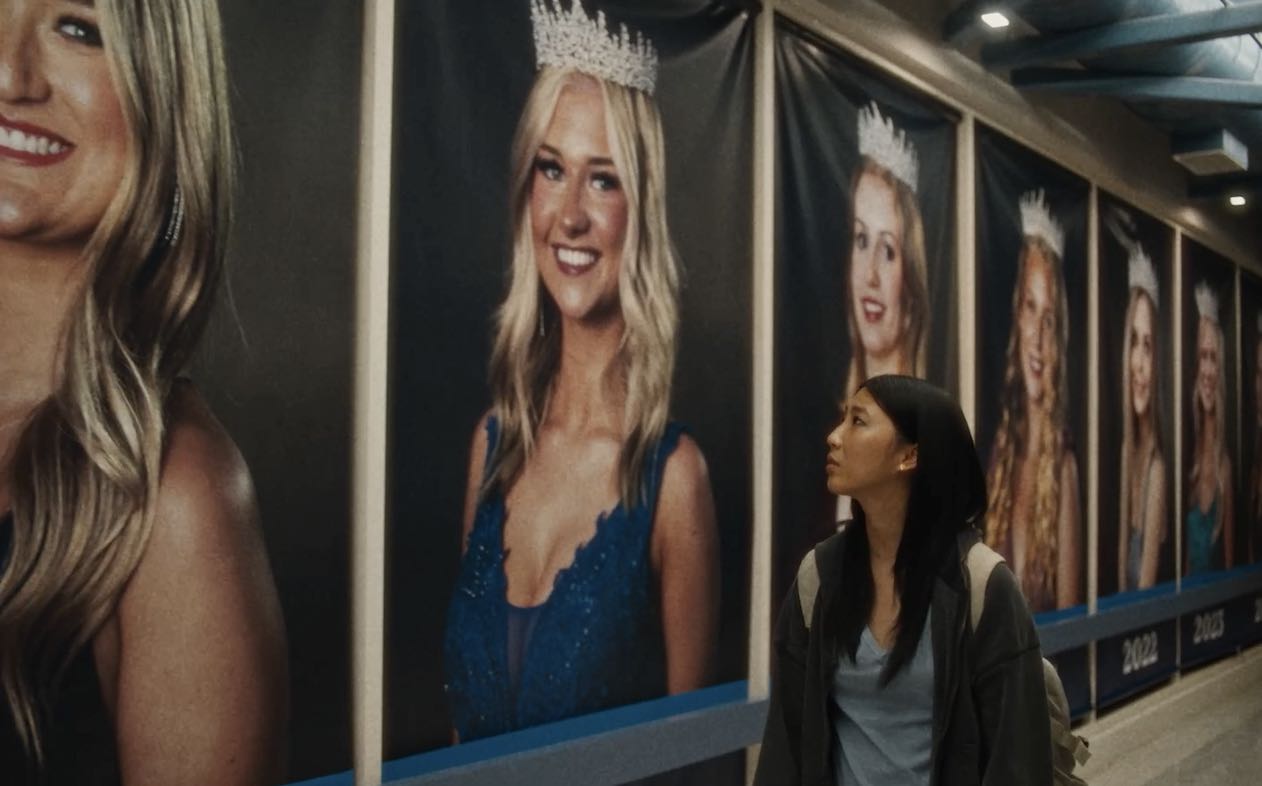
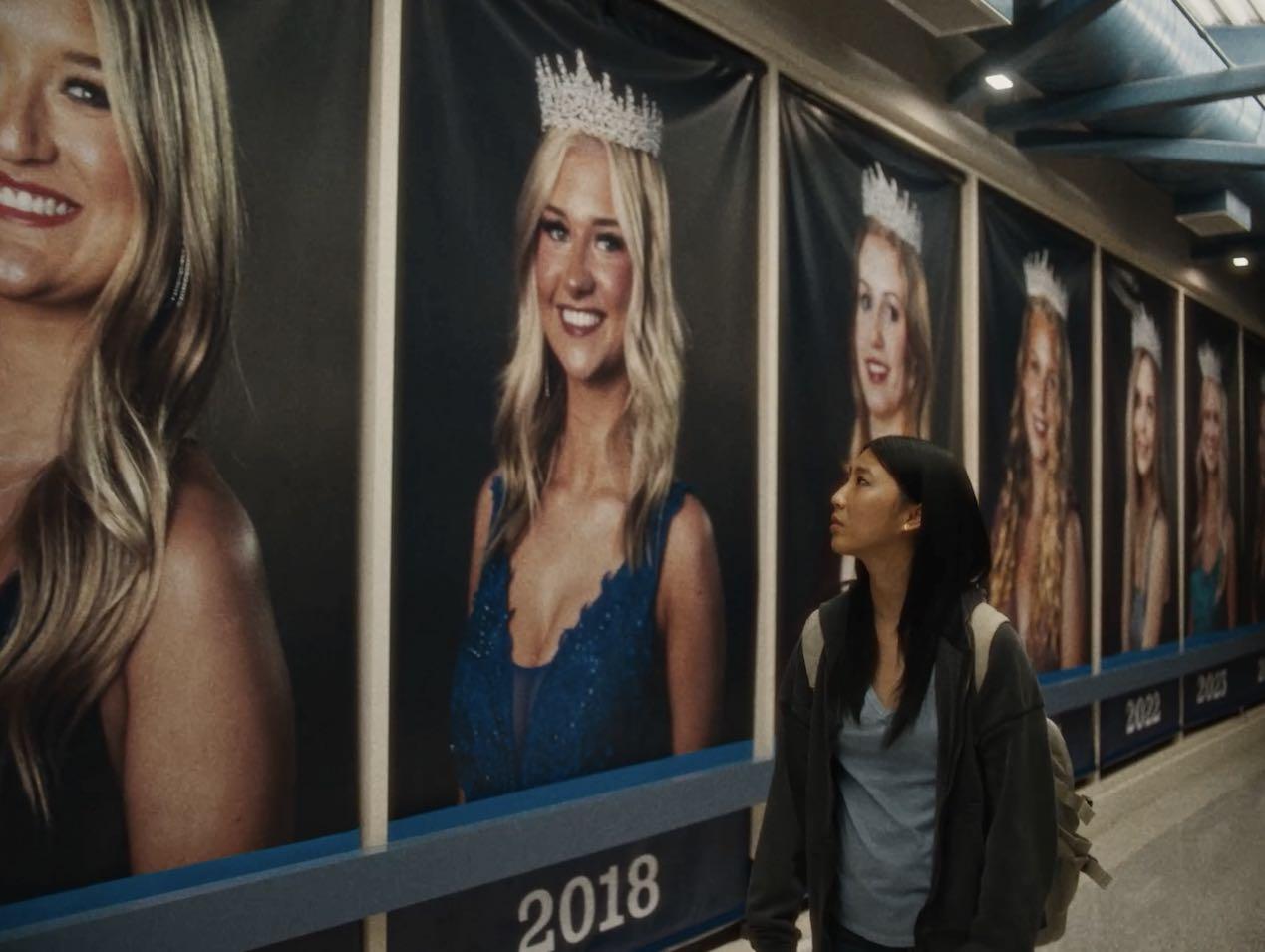
In the movie, Joan Huang (played by Shirley Chen) idolizes the popular girls and dreams of being prom queen, but fears the only way to win is to look like all the past queens whose portraits line her high school halls.
Enter Ethnos: a mysterious cosmetic surgery clinic that makes people of color appear white. Joan undergoes the procedure and wakes up a beautiful blonde destined for the crown, but at what cost?
“Slanted” opens in wide release on March 13.
Check out the trailer below.